


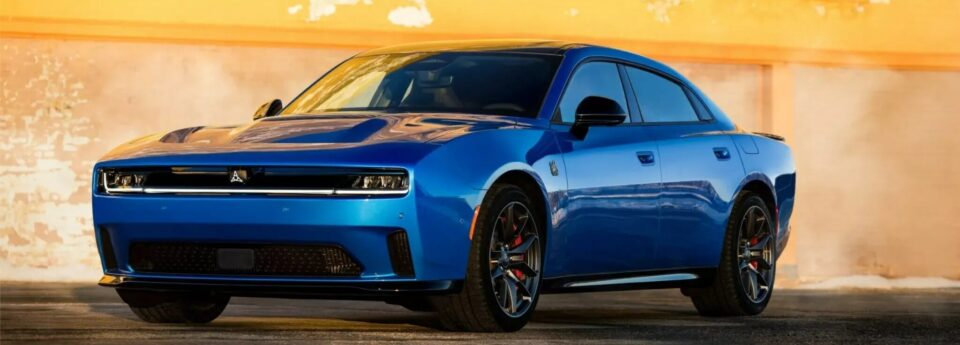
Dodge Charger: A Timeless Classic Car of Raw American Power
Dodge Charger Classic Car: Power, Legacy, and True American Muscle
Some cars are built to be driven. Others are built to be felt. The Dodge Charger has always been both — a car that rumbles into a room before it even arrives, that commands attention on a motorway the same way it does on a drag strip, and that carries over 60 years of American automotive DNA in every curve of its bodywork.
It’s bold. It’s loud — in the best possible way. And for UK enthusiasts who love their cars with genuine character and theatre, the Dodge Charger is one of the most compelling American imports on the market.
Ship Cars Ltd, we’ve helped countless customers bring their dream Charger across the Atlantic — and we understand exactly why this car inspires that kind of passion.
The Origin Story: Born in the Muscle Car Golden Age
The Dodge Charger first arrived in 1966 as Chrysler’s answer to the growing appetite for performance-focused, stylish American coupes. The timing was perfect. The mid-1960s was the era when the muscle car was king — Ford had the Mustang, Pontiac had the GTO, and Dodge wanted something that would compete at the very top of that conversation.
The original Charger was based on the Coronet platform, wore a fastback roofline that turned heads from every angle, and came equipped with a range of V8 engines that made it immediately credible as a performance machine. It wasn’t an overnight sales phenomenon — the first generation had its quirks — but it planted a seed that would grow into one of the most celebrated automotive legacies in American history.
Generation by Generation: A Legacy Built in Stages
Fihe original Charger was a striking car for its time. Its smooth fastback silhouette, full-width tail lights, and hidden headlamps gave it a futuristic look that stood apart from anything else on American roads in 1966. Under the bonnet, buyers could opt for a range of engines including the legendary 426 HEMI V8 — a 7.0-litre powerhouse producing 425 hp that remains one of the most revered engines in muscle car history.
Sales were modest — around 37,000 units in the first year — but the design and engineering foundation had been firmly laid.
Second Generation (1968–1970)
This is where the Charger became a legend. The second generation brought a complete redesign — smoother, more sculpted, with deeply recessed grille, sweeping Coke-bottle curves, and an unmistakable presence that no photograph quite does justice to.
It was this generation that appeared in the 1968 film Bullitt, driven by the villain in one of cinema’s most iconic car chase sequences alongside Steve McQueen’s Ford Mustang. The Charger’s menacing black presence in that chase cemented its status as the muscle car world’s definitive villain-hero — brooding, powerful, and devastatingly cool.
Then came The Dukes of Hazzard — and the bright orange 1969 Charger known as the General Lee became one of the most recognised cars in television history, introducing the Charger to an entirely new generation of fans worldwide.
Mechanically, the second-gen Charger was available with the 426 HEMI, the 440 cubic inch Magnum V8, and a range of smaller V8 options. These were genuinely fast cars — capable of a sub-14 second quarter mile in full HEMI spec.
Third Generation (1971–1974)
The third generation grew larger and heavier, reflecting shifting American tastes towards personal luxury coupes. The performance was still there — particularly in the early years before emissions regulations began to bite — but the Charger was broadening its appeal beyond pure muscle car buyers.
The 1971 Charger remains a fan favourite for its aggressive styling, and the Charger Super Bee variant from this era is particularly sought after by collectors today.
Fourth and Fifth Generations (1975–1987)
These years were tough for American performance cars as a whole. The oil crisis, tightening emissions laws, and shifting consumer priorities pushed the Charger away from its muscle car roots and towards a smaller, more economical format. The 1975–1978 Charger was built on the Cordoba platform, and while it retained the Charger name, it was a very different animal from the fire-breathing machines that came before it.
By the mid-1980s the Charger had become a front-wheel-drive compact — a difficult chapter that most enthusiasts politely skip past.
Sixth Generation (2006–Present)
Then came the revival that nobody expected to work quite so well. In 2006, Dodge brought the Charger back — and this time as a four-door saloon, which raised plenty of eyebrows in the muscle car community. But Dodge backed up the bold decision with equally bold performance.
The modern Charger lineup includes some of the most powerful production saloon cars ever built:
- Charger R/T — 5.7-litre HEMI V8, producing 370 hp
- Charger Scat Pack — 6.4-litre HEMI V8, producing 485 hp
- Charger SRT Hellcat — supercharged 6.2-litre HEMI V8, producing a staggering 717 hp
- Charger SRT Hellcat Redeye — supercharged 6.2-litre HEMI V8, producing 797 hp
- Charger SRT Super Stock — the ultimate expression, producing 807 hp from the factory
These are not subtle cars. They are not meant to be. The Charger Hellcat can sprint from 0 to 60 mph in under 3.6 seconds and reach a top speed of 196 mph — figures that embarrass many dedicated sports cars costing considerably more money.
Key Specifications at a Glance
| Model | Engine | Power Output | 0–60 mph |
|---|---|---|---|
| Charger R/T | 5.7L HEMI V8 | 370 hp | ~5.2 sec |
| Charger Scat Pack | 6.4L HEMI V8 | 485 hp | ~4.3 sec |
| Charger SRT Hellcat | 6.2L Supercharged V8 | 717 hp | ~3.6 sec |
| Charger SRT Hellcat Redeye | 6.2L Supercharged V8 | 797 hp | ~3.6 sec |
| Charger SRT Super Stock | 6.2L Supercharged V8 | 807 hp | ~3.5 sec |
Why UK Enthusiasts Are Obsessed With the Dodge Charger
The Charger’s appeal in the UK is easy to understand once you’ve seen one in person. On British roads, it is a genuinely rare and striking presence — something that draws attention at every set of traffic lights, every car park, and every show it attends.
The combination of imposing size, thundering V8 soundtrack, and that unmistakable American styling hits differently here than it does in the States — precisely because it’s so different from everything else on the road. And unlike a two-door muscle car, the four-door format of the modern Charger means it can be used as a practical daily driver while still delivering performance that most dedicated sports cars would struggle to match.
Classic Chargers — particularly the 1968–1969 second-generation models — are also firmly established as blue-chip collectibles. A clean, numbers-matching 1969 HEMI Charger in good condition is now a six-figure car at major US auction houses, and values continue to climb year on year.
How Ship Cars Ltd Can Help You Import Your Dodge Charger
Whether you have your eye on a pristine second-generation classic or a thundering modern Hellcat, Ship Cars Ltd makes importing your Dodge Charger to the UK straightforward and stress-free. We handle everything from US-wide vehicle collection and export documentation to container shipping, UK port handling, and full transit insurance. Our team has extensive experience shipping American muscle cars across the Atlantic, so your Charger is treated with the care and respect it deserves — every mile of the journey. Get your free, no-obligation quote today at Ship Cars and take the first step towards owning the ultimate American icon.
Ready to import your Dodge Charger? Contact our specialist team today — we’ll guide you through every step from the US to your driveway. View our Gallery to Explore Latest Vehicle Shipping.


