


| Tel: | 01495 320540 |
| Mob: | 07513 898320 |
| Email: | info@shipcars.co.uk |

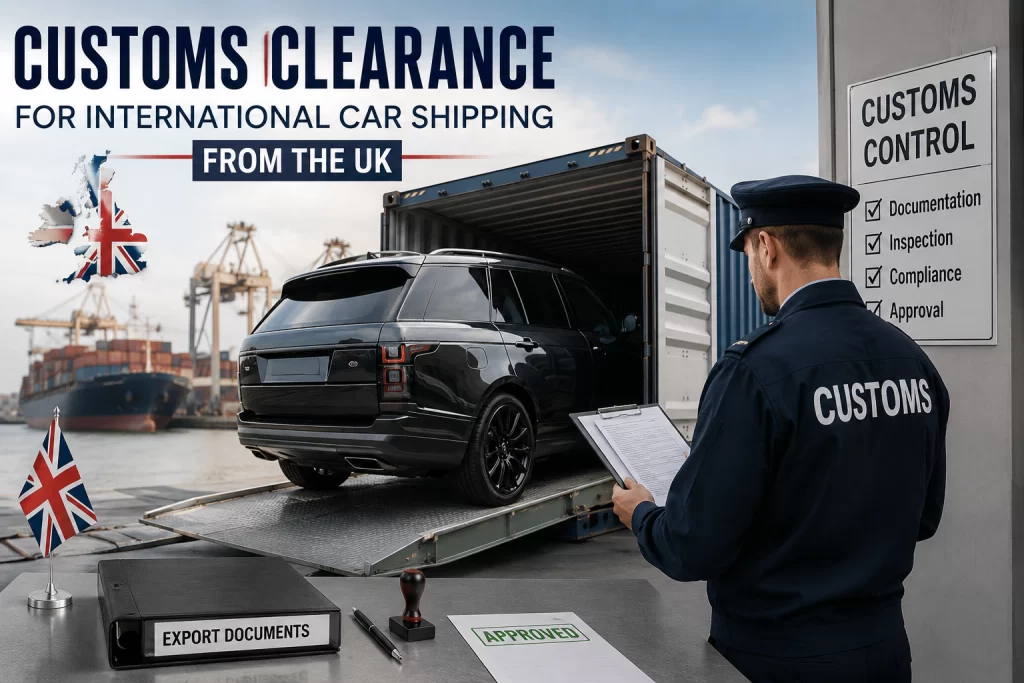
Quick Answer: Customs clearance is the formal process of declaring a vehicle to government authorities when it crosses an international border. For UK vehicle exports, Ship Cars submits an HMRC export declaration before the vehicle sails. At the destination, an import declaration is filed with that country’s customs authority, duties and taxes are assessed, and the vehicle is released. Ship Cars manages UK export clearance as standard and coordinates destination customs through trusted overseas agents.
Customs Clearance — The Part Nobody Tells You About Properly
The vehicle is booked. The sailing date is confirmed. The car is ready to go. And then someone mentions customs clearance — and suddenly the whole thing feels more complicated than it needs to be.
We hear this regularly from customers across the UK. Customs clearance is the stage of international vehicle shipping that causes the most anxiety, largely because most people have never had to deal with it before and don’t know what to expect. At Ship cars ltd, we think the best remedy for that anxiety is clear, honest information — so here it is.
Whether you’re exporting a car via RORO ROLL-ON/ROLL-OFF, shipping in a shared container, or using a container shipping for a high-value or classic vehicle, customs clearance is a mandatory part of every international shipment. It applies at both ends of the journey: when the vehicle leaves the UK and when it arrives at its destination port. Understanding what’s involved — and having an experienced team in your corner — makes the process significantly more straightforward.
What Is Customs Clearance for International Vehicle Shipping?
Customs clearance is the formal process by which government authorities in both the exporting and importing country verify, document, and approve the movement of your vehicle across international borders. It exists to ensure that vehicles are correctly declared, that applicable taxes and duties are paid, and that the shipment complies with each country’s import and export regulations.
For vehicles shipped from the UK, this means submitting an export declaration with HMRC (His Majesty’s Revenue and Customs) before the vehicle departs. At the destination, an import declaration is made to that country’s customs authority, duties and taxes are assessed and paid, and the vehicle is released for collection.
It is not a single form. It is not done in five minutes. But with the right preparation and the right team handling it, it doesn’t need to be a source of stress either.
What Is Customs Clearance for International Vehicle Shipping?
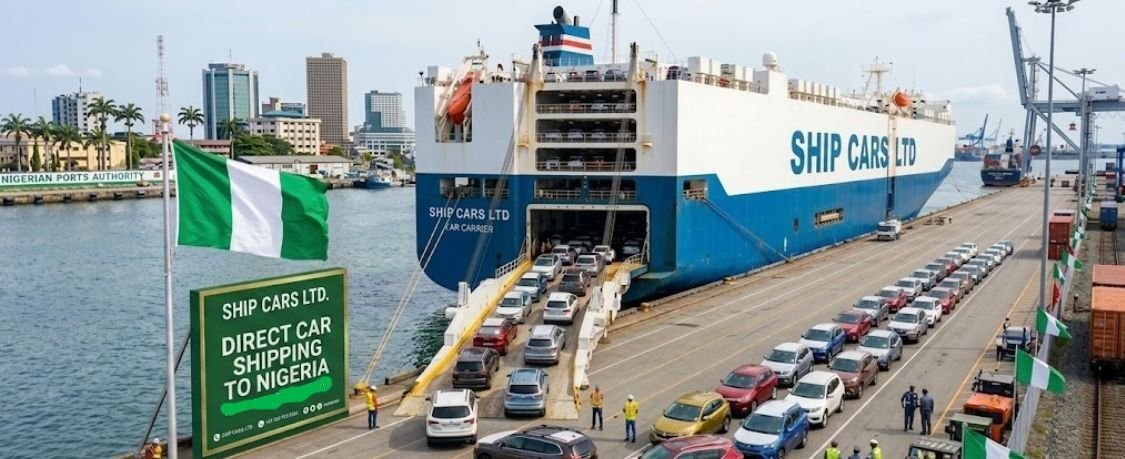
Before your vehicle is loaded onto a RORO vessel or sealed inside a shipping container at a UK port, an export declaration must be submitted to HMRC via the Customs Declaration Service. This declaration includes the vehicle’s make, model, year of manufacture, VIN/chassis number, value, and the details of the exporter and consignee.
One of the most common causes of port delays is incorrect or inconsistent documentation. A single transposed digit on a VIN number, a registration that doesn’t match the V5C, or a missing bill of sale can result in a manifest correction — which costs time and money. Our team checks every document before it goes anywhere near a shipping line.
What Documents Do I Need for UK Export Customs Clearance?
V5C Logbook (original) — proof of ownership and vehicle identity; you retain the main document and submit Section 11 to the DVLA to notify them of permanent export
Bill of Sale / Purchase Invoice — required to declare the vehicle’s value to HMRC
Photo ID (passport) — to verify the identity of the exporter
Consignee Details — if someone other than you is collecting the vehicle at destination
MOT Certificate — required if the vehicle is being collected by a trade plate driver
For electric or hybrid vehicles shipping via container (the only permissible method for EVs internationally), a Dangerous Goods Declaration covering the high-voltage battery is also required.
Real-world example:
A customer in Bristol shipping a 2019 Tesla Model 3 to Dubai via container initially submitted documentation with a VIN that differed by one character from the V5C. Our team identified the discrepancy before submission, corrected it, and the export cleared without delay. The vehicle arrived at Jebel Ali port within the confirmed transit window of 22 days.
What Happens at Destination Customs When My Vehicle Arrives?
This is where customs requirements become destination-specific, and where having experienced agents on the ground at the receiving port genuinely matters. Every country operates its own customs authority with its own rules, duty rates, and documentation requirements. What applies in Australia is different from what applies in the USA, which is different again from the UAE.
Here is a brief overview of what to expect on some of our most active routes:
UK to Australia Australian customs clearance is managed by the Australian Border Force (ABF). All vehicles must obtain a Vehicle Import Approval (VIA) via the ROVER portal before they are shipped — not after arrival. On arrival, every vehicle undergoes mandatory biosecurity (quarantine) inspection by the Department of Agriculture, Fisheries and Forestry. Customs clearance typically takes 3–7 working days once quarantine is cleared. Import duty is generally 5% of the CIF (Cost, Insurance and Freight) value, plus 10% GST on the total assessed value. UK-manufactured vehicles may qualify for duty-free import under the UK-Australia Free Trade Agreement.
Customer Experience:
A family relocating from Manchester to Perth shipped their Land Rover Discovery via container. Our team coordinated the ROVER import approval application, managed all export documentation from Southampton, and liaised with our Australian customs agent on arrival. The vehicle was cleared and released within 6 working days of port arrival — exactly as projected.
UK to USA The USA requires a formal customs entry filed with US Customs and Border Protection (CBP). For most personal vehicle imports, this involves the original Title document, a Bill of Lading, a Commercial Invoice, and EPA/DOT compliance forms confirming the vehicle meets US safety and environmental standards — or qualifying for exemption (typically for vehicles over 25 years old). Port of arrival charges and customs broker fees apply in addition to the ocean freight.
UK to UAE (Dubai) Dubai is one of our most active destinations for container vehicle shipping from the UK. UAE customs apply a standard 5% customs duty on most passenger vehicles, calculated on the CIF value, plus 5% VAT on the duty-inclusive total. Required documents include an original purchase invoice, export certificate, Bill of Lading, and passport/Emirates ID for UAE residents. Standard customs clearance at Jebel Ali typically takes 2–4 working days. Vehicles older than 10 years face import restrictions unless classified as classic.
UK to New Zealand
New Zealand customs clearance is managed by New Zealand Customs Service. Most standard passenger vehicles imported from the UK qualify for 0% customs duty. GST at 15% applies on the landed CIF value unless the importer qualifies for the Transfer of Residence (ToR) concession (12 months ownership required; apply at customs.govt.nz before shipping). All vehicles must pass mandatory MPI biosecurity inspection on arrival — vehicles must be professionally cleaned before departure from the UK and a dated commercial cleaning receipt is required as proof. After customs and MPI clearance, vehicles must pass a Waka Kotahi compliance inspection before registration. Source: New Zealand Customs Service (customs.govt.nz) — verify before shipping.
UK to EU (Spain, Italy, Greece, and other EU destinations)
Under the UK-EU Trade and Cooperation Agreement (TCA), most UK-origin vehicles imported into EU member states qualify for 0% customs duty, provided UK origin is evidenced by the V5C logbook. EU VAT (IVA in Spain and Italy, ΦΠΑ in Greece) applies on the landed CIF value — rates are 21% in Spain, 22% in Italy, and 24% in Greece. Transfer of Residence relief is available in most EU countries for qualifying permanent relocators, subject to minimum ownership periods and residency requirements. A licensed customs agent (agente de aduanas / spedizioniere / τελωνειακός πράκτορας) at the destination port is strongly recommended. Source: UK Government (gov.uk/export) — verify TCA origin requirements before shipping.
The Documents That Matter — A Clear Overview

Every international vehicle shipment — whether RoRo, shared container, or dedicated container — requires accurate documentation at both origin and destination. The core documents across most routes are:
Bill of Lading (BOL) — the legal transport document issued by the shipping line; essential for claiming the vehicle at destination
V5C / Certificate of Title — proof of vehicle ownership
Commercial Invoice / Bill of Sale — used to declare vehicle value for duty assessment
Import Declaration — submitted at destination to customs authority
Vehicle Import Approval — required for certain destinations (Australia, New Zealand) before sailing
Passport / Photo ID — for both exporter and consignee
For container shipments of non-running, classic, or modified vehicles, additional declarations may be required. Our team identifies these requirements at the point of booking — not after the vehicle has sailed.
Transfer of Residence — Exporting Your Car from the UK:
If you are permanently relocating from the UK to another country and taking your vehicle with you, many destination countries offer a Transfer of Residence (ToR) exemption that can reduce or eliminate import duty and VAT at destination. The specific scheme, eligibility criteria, and application process vary by country — Spain, Italy, Greece, Australia, and New Zealand all have their own versions. Our team advises on destination-specific ToR eligibility at the point of booking, and we coordinate with our local agents to support the application process.
Transfer of Residence — Importing Your Car to the UK:
If you are relocating to the UK and bringing your vehicle with you, HMRC’s Transfer of Residence Relief may exempt you from UK import duty and VAT. Eligibility requires that you have owned and used the vehicle for at least six months outside the UK and are establishing your primary residence in the UK for the first time. Apply to HMRC before the vehicle arrives in the UK. Contact Ship Cars if you need support with UK import customs clearance for a returning resident or relocating customer.
Why Does Customs Clearance Go Wrong — and How Do We Prevent It?
In our experience, the vast majority of customs delays come down to the same small set of preventable issues:
Mismatched vehicle details between the V5C, the bill of sale, and the shipping line’s manifest
Missing or incomplete import approval documentation (particularly for Australia and New Zealand)
Vehicles shipped without an up-to-date bill of sale, making valuation impossible to verify
Biosecurity non-compliance on arrival (vehicles not cleaned adequately before shipping to Australia)
Incorrect HS commodity codes on commercial shipments travelling alongside a vehicle
At Ship Cars Ltd, our job is to ensure none of these things happen to your vehicle. Every document set is reviewed before submission. Every route is handled by team members who know that destination’s specific requirements. And if something unexpected arises at the destination port, we have established agents on the ground who can respond quickly.
What Does Ship Cars Handle — and What Falls to You?
To be completely transparent: we manage the UK export clearance and coordinate destination customs clearance through our trusted network of overseas agents. Import duties, taxes, port handling fees, and biosecurity charges at destination are levied by the relevant government authorities — they are not within our control, and we do not mark them up. We always provide an honest estimate of what to expect at destination before you commit to shipping.
What we do is make sure the paperwork is right, the route is right, and the agent on the other end knows what to expect. That’s the part that makes the difference between a smooth clearance and a vehicle sitting in a port longer than it should.
Contact us today for further information or visit our sailing schedule and Get an instant quote to schedule your car shipping with us.
Frequently Asked Questions — Customs Clearance for Vehicle Shipping
What is customs clearance for international car shipping?
Customs clearance is the formal process by which government authorities verify, document, and approve the movement of a vehicle across an international border. For UK vehicle exports, Ship Cars submits an HMRC export declaration before the vehicle sails. At the destination, an import declaration is filed, duties and taxes are assessed, and the vehicle is released for collection.
What documents do I need for UK export customs clearance?
The core documents are: original V5C logbook (retain the main document; submit Section 11 to DVLA to notify permanent export); a bill of sale or purchase invoice declaring vehicle value; photo ID (passport); consignee details if someone other than you is collecting at destination. For electric vehicles, a Dangerous Goods Declaration is also required. Ship Cars checks every document set before submission.
Does Ship Cars handle customs clearance on my behalf?
Yes. Ship Cars submits the UK export declaration via HMRC’s Customs Declaration Service (CDS) as standard for every vehicle shipment. At the destination, we coordinate customs clearance through our network of trusted overseas agents. Import duties, taxes, and port fees are levied by destination governments — we do not mark these up. We provide an honest estimate of destination costs before you commit to shipping.
Do I pay import duty when my car arrives at the destination?
It depends on the destination. UAE: 5% duty + 5% VAT. Australia: 5% duty + 10% GST (UK-origin vehicles may qualify for reduced duty under the UK-Australia FTA). EU countries (Spain, Italy, Greece): 0% duty on UK-origin vehicles under the UK-EU TCA + local VAT. New Zealand: 0% duty + 15% GST. USA: approximately 2.5% duty. Transfer of Residence relief may exempt qualifying relocators from duty and VAT at destination.
What is the Transfer of Residence (ToR) relief?
Many destination countries offer Transfer of Residence relief — exempting qualifying relocators from import duty and VAT when permanently moving abroad with their personal vehicle. Conditions typically include owning and using the vehicle for at least six months before the move and not disposing of it for a set period after import. Eligibility and application processes vary by destination country — Ship Cars advises on ToR eligibility at the point of enquiry.
Do I need a Vehicle Import Approval before shipping to Australia?
Yes — and it must be obtained before the vehicle is loaded, not after arrival. Australian Border Force requires a Vehicle Import Approval (VIA) via the ROVER portal before shipping. Arriving at an Australian port without a VIA will result in the vehicle being held. Ship Cars advises on the VIA application process at the point of booking.
What are the most common reasons customs clearance is delayed?
In our experience: mismatched vehicle details between the V5C, bill of sale, and shipping manifest; missing import approval documentation (Australia and New Zealand require this before sailing); vehicles shipped without a current bill of sale; biosecurity non-compliance on arrival in Australia or New Zealand; and incorrect HS codes on commercial shipments. Ship Cars reviews every document before submission — these issues are entirely preventable.
Can I ship an electric vehicle internationally and what are the customs requirements?
Yes — by dedicated container only. Under the IMDG Code, the battery must typically be at 30% state of charge or below at time of loading — arriving at port with a full charge can result in the vehicle being refused. A Dangerous Goods Declaration is required. Import duty and tax at destination is the same as for petrol vehicles. Ship Cars provides full battery preparation guidance specific to your vehicle and carrier before collection.
What is the Customs Declaration Service (CDS)?
The Customs Declaration Service is HMRC’s current digital platform for all UK customs declarations — it replaced the legacy CHIEF system in January 2024. All UK vehicle exports must be declared via CDS. Ship Cars submits export declarations through CDS on your behalf as a standard part of the shipping service — you do not need to interact with CDS directly.

The contents of this website are subject to the intellectual property rights of Ship Cars Ltd and are copyright © Ship Cars Ltd ™