


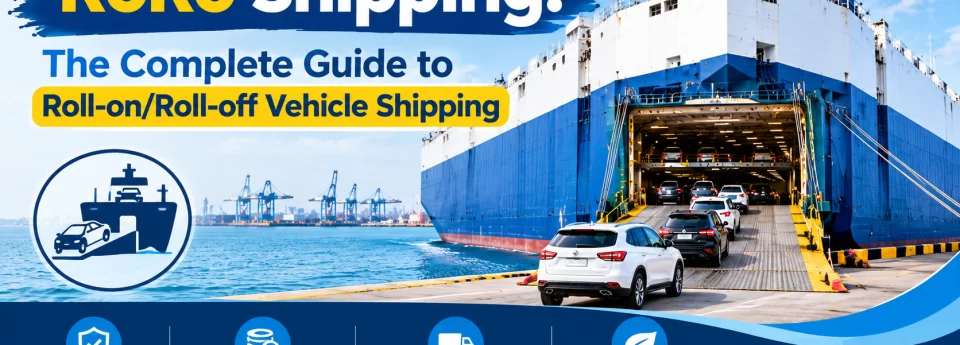
RoRo Shipping: The Complete Guide to Roll-on/Roll-off Vehicle Shipping
A RoRo (Roll-on/Roll-off) ship is a specialist vessel designed exclusively for wheeled cargo. Vehicles are driven aboard via a built-in stern or side ramp and secured on multi-deck vehicle bays for the ocean crossing. There are no cranes or containers involved. RoRo is the most cost-effective method for shipping standard, driveable vehicles internationally and is used by car manufacturers, dealers, and private individuals to move vehicles across every major ocean route. Electric vehicles and non-running cars are not accepted on RoRo vessels and must use container shipping instead.
RORO Shipping: Roll-on/Roll-off Vehicle Shipping
When it comes to shipping a car internationally, Roll-on/Roll-off (RORO) is one of the most popular and efficient methods available. At ShipCars, we specialise in providing reliable and cost-effective RORO services for customers across the globe. If you’re considering shipping your vehicle, this definitive guide will explain everything you need to know about the RORO process, its benefits, limitations, and how to prepare your car for a safe and seamless journey.
What is RORO Shipping?
RORO, an acronym for Roll-on/Roll-off, is a method of maritime transport designed specifically for wheeled cargo. Unlike container shipping, where vehicles are craned into a steel box, RORO vessels are essentially massive, multi-storey floating car parks.
- The Process: Your vehicle is driven under its own power onto the vessel via a stern or side ramp. Once on board, it is securely parked and chocked (with wooden or metal blocks placed against the wheels) and often strapped down to prevent movement during the ocean voyage. At the destination port, the process is reversed, and your car is driven off the ship.
This method is a proven, industry-standard solution used by manufacturers, dealers, and private individuals worldwide for transporting operational motor vehicles.
ShipCars operates RoRo services from the UK’s primary vehicle export ports including Southampton, Sheerness, and Tilbury (London Gateway). The departure port for your shipment depends on the destination and the specific vessel’s schedule. Your booking confirmation will confirm the UK departure port, and ShipCars arranges collection from anywhere in the UK to the port as part of the service.
Key Advantages of Choosing RORO Shipping
RORO shipping offers several distinct benefits that make it the preferred choice for many of our clients.
-
Cost-Effectiveness
RORO is generally the most affordable method for shipping a single, standard vehicle. Because the shipping line can efficiently pack many cars into a single vessel, the cost per unit is lower than other methods.
-
Lower Destination Charges
A significant financial advantage of RORO is the reduction of handling fees at the destination port. Since your vehicle is simply driven on and off the ship, there is no need for expensive container unloading equipment (like cranes or reach stackers) or container de-stuffing fees. This results in much lower port handling charges compared to container shipping, making the total landed cost more predictable and often cheaper.
-
Efficiency and Simplicity
The RORO process is straightforward. The loading and unloading procedures are quick, which can sometimes lead to faster port turnaround times compared to containerised cargo. The entire process is streamlined for wheeled vehicles.
-
Proven Reliability
RORO is a well-established and highly regulated sector of the shipping industry. Vessels are specifically designed for this purpose, with experienced crews who specialise in securing vehicles for an ocean crossing.
RoRo Transit Time Examples (From ShipCars’ Live 2026 Sailing Schedule):
Southampton to Spain (Santander): 2 to 3 days
UK to USA East Coast (Baltimore): 17 to 18 days
UK to South Africa (Durban): 20 to 21 days
UK to Australia (Fremantle): 36 days minimum
For the complete transit time guide covering over 60 destinations: How Long Does It Take to Ship a Car from the UK?
What Can Be Shipped with RORO?

RORO is a versatile service, but it is designed for specific types of cargo.
- Cars & SUVs: The most common type of vehicle shipped via RORO.
- Vans & Light Commercial Vehicles: Typically allowed, though may be subject to different pricing based on size and weight.
- Motorcycles: Can often be shipped via RORO, secured in a dedicated area of the vessel.
- Caravans & Trailers: Many RORO carriers accept these, provided they meet size and condition requirements.
- Boats on Trailers: Small boats on a road-legal trailer are often acceptable.
- Construction & Agricultural Machinery: Self-propelled machinery like tractors and excavators can be shipped via RORO if they are operational and can be driven on and off the vessel.
Critical Restrictions and Limitations
Understanding what is not permitted is just as important as knowing what is allowed. Failure to comply can lead to your vehicle being refused for loading.
-
Personal Belongings and Goods
This is one of the most important rules in RORO shipping.
- Can the vehicle be loaded with goods? No. As a standard rule, loading your vehicle with personal goods is not allowed, please speak to a member of team to confirm.
- Why? There are two primary reasons:
- Safety & Security: Personal items can shift during transit, causing damage to your vehicle or others. They can also pose a fire risk or contain prohibited items unknown to the shipping line.
- Customs Compliance: Shipping lines cannot verify the contents of a sealed vehicle. Personal effects would complicate customs declarations at the destination and could be considered commercial smuggling.
- The Exception: You may be allowed to leave factory-fitted items (e.g., a spare tyre, factory tool kit) and a very limited number of personal effects in the glove compartment (e.g., registration documents). You must always confirm what is permissible with us directly before shipping.
-
Electric Vehicles (EVs)
- Are Electric Vehicles allowed? Normally, no. The vast majority of RORO carriers do not accept fully electric vehicles due to the potential fire hazard associated with their lithium-ion batteries.
- What are the alternatives? If you need to ship an electric vehicle, it must be transported via a dedicated container. Please be aware that this service typically incurs a hazard surcharge. For more information on this option, visit our International Container Shipping page.
-
Vehicle Condition
- Operational Status: For RORO shipping, your vehicle must be in full working order. It must be able to start, drive, and brake under its own power to be safely loaded and unloaded. We cannot accept non-running or “project” cars for RORO transport.
Mandatory RORO Vehicle Preparation Checklist
Proper preparation is non-negotiable for a safe and problem-free shipment. Follow these essential steps.
-
Fuel Level
- Requirement: The fuel tank must be no more than 1/4 full. This is a critical safety regulation to minimise the risk of fire and explosion onboard the vessel.
-
Cleaning
- Requirement: Your vehicle should be clean, both inside and out. A heavily soiled vehicle, especially one with mud or debris on the undercarriage, may be rejected for loading due to biosecurity risks at the destination country (e.g., New Zealand, Australia). A clean vehicle also allows for an accurate pre-shipping inspection.
-
Mechanical & Personal Preparation
- Disable Alarms: Deactivate any alarm or immobiliser system to prevent it from sounding during the voyage and draining the battery.
- Battery: Ensure the battery is secured and fully charged. For long voyages, we may recommend disconnecting the battery.
- Fluid Levels: Check that engine oil, coolant, and other fluid levels are correct and that there are no active leaks.
- Tyres: Inflate tyres to the correct pressure.
- Remove Valuables: Remove all personal valuables, documents (except those required for export/import), and loose items from the cabin and boot.
For a comprehensive, step-by-step guide, we strongly recommend reading our dedicated article: How to Prepare Your Car for Shipping.
RORO vs. Container Shipping: Which is Right for You?
While RORO is an excellent solution for many, it’s not perfect for every situation. Here’s a quick comparison to help you decide.
| Feature | RORO Shipping | Container Shipping |
|---|---|---|
| Cost | Generally lower cost for a single vehicle. | More expensive, but offers more control. |
| Destination Fees | Much lower port handling charges. | Higher due to crane and handling fees. |
| Vehicle Condition | Must be fully operational. | Non-running vehicles are accepted. |
| Personal Belongings | Strictly not allowed. | Allowed in dedicated containers (with rules). |
| Security | Good; vehicle is on a secured vessel. | Excellent; vehicle is in a private, sealed container. |
| Best For | Standard, operational cars, vans, and motorbikes. | High-value/classic cars, non-runners, EVs, and customers needing to ship personal effects. |
To explore the container option in detail, please see our International Container Shipping page.
Other Resources
Documents Required for Car Shipping
Is RORO Shipping the Right Choice for You?
RORO shipping is the ideal solution if you are shipping a standard, operational vehicle and are looking for the most cost-effective and efficient method. Its key advantages of lower overall cost, reduced destination fees, and proven reliability make it the go-to choice for millions of vehicle owners every year.
However, if your vehicle is non-operational, an electric vehicle, a high-value classic, or you need to ship personal belongings inside it, then container shipping will be the required and more suitable option.
FAQS – RORO Car Shipping
Ready to get a quote or have more questions?
Contact the experts at ShipCars today. We will guide you through the entire process, provide a transparent quote, and ensure your vehicle is prepared correctly for its RORO journey.
What is a RoRo ship?
A RoRo (Roll-on/Roll-off) ship is a vessel designed specifically for wheeled cargo. Unlike standard cargo ships that use cranes to load and unload, RoRo vessels have built-in ramps at the stern or sides of the ship. Vehicles drive on under their own power, are secured on multi-deck vehicle bays, and drive off at the destination port. No containers or lifting equipment are involved.
Can I put personal belongings in my car on a RoRo shipment?
No — this is prohibited without exception on all RoRo services. Shipping lines cannot verify the contents of a vehicle’s cabin and personal items create customs compliance and security risks. Vehicles are inspected at loading and any found to contain personal effects may be refused. If you need to ship personal belongings with your vehicle, container shipping is the only option, and written approval from both the shipping line and destination agent is required before packing.
Are electric vehicles accepted on RoRo ships?
No. The vast majority of RoRo carriers prohibit electric vehicles due to the fire risk associated with lithium-ion batteries in an enclosed vessel environment. EVs must use container shipping. ShipCars arranges dedicated container shipping for all electric vehicle exports from the UK. Contact us to discuss the appropriate container option for your EV.
What happens if my car breaks down on a RoRo vessel?
RoRo shipping requires your vehicle to be fully operational — it must be able to start, drive, and brake under its own power to be loaded and unloaded safely. A vehicle that cannot move under its own power cannot use RoRo. If your car develops a fault after loading and before unloading, port staff at the destination will assess the situation. This is why vehicles in questionable mechanical condition should always use container shipping, where non-running handling can be arranged in advance.
How is my car secured on a RoRo vessel?
Once your vehicle is driven aboard, trained port stevedores position it on the vehicle deck and secure it using wheel chocks (wooden or metal blocks placed against the tyres) and securing straps fixed to the vehicle’s tiedown points. This prevents movement during the ocean crossing. Your car is treated the same way new vehicles from manufacturers are shipped — the process is proven across millions of vehicles every year.
What is the difference between RoRo and container shipping for cars?
RoRo is cheaper, faster to load, and available for all standard driveable vehicles — but the vehicle is exposed to the marine environment inside the vessel hold and personal belongings are prohibited. Container shipping costs more and is required for electric vehicles, non-running cars, and high-value classics, but provides a fully sealed, private environment and allows limited personal effects with prior approval.
For a full comparison: Car Shipping Methods: RoRo vs Container Explained


