


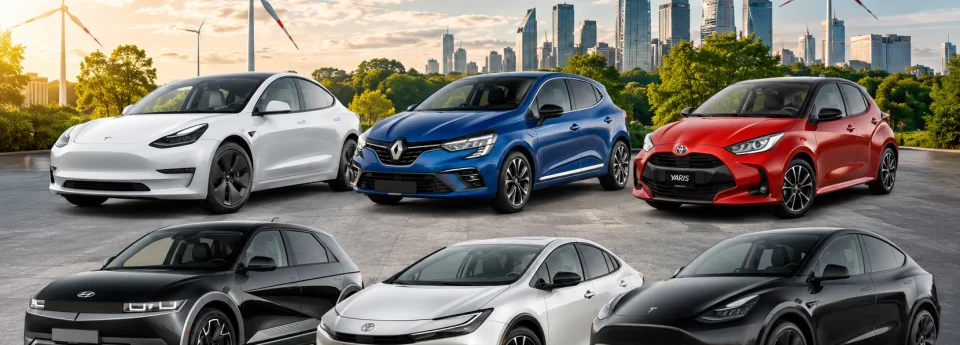
Most Eco-Friendly Cars of 2026
If you’re in the market for a low-emission vehicle this year, you’ve never had more choice. From fully electric cars boasting 500-mile ranges to frugal self-charging hybrids nudging 70 mpg, 2026 has produced a generation of clean, efficient cars that don’t ask you to make sacrifices. Here are the six most eco-friendly cars you can buy in the UK right now — ranked by real-world emissions credentials, running costs, and how well they actually work in everyday British driving conditions.
What Makes a Car “Eco-Friendly” in 2026?
In simple terms, an eco-friendly car produces fewer grams of CO₂ per kilometre than a conventional petrol or diesel equivalent. In the UK, emissions are measured in g/km, and anything below 50 g/km qualifies as a low-emission vehicle under HMRC guidelines — which also influences Benefit-in-Kind (BIK) tax rates for company car drivers.
There are broadly three categories to consider:
- Fully electric vehicles (EVs): Zero tailpipe emissions. The cleanest option at point of use.
- Plug-in hybrids (PHEVs): Run on battery power for typical short journeys, then switch to petrol. Can achieve under 20 g/km CO₂ when charged regularly.
- Self-charging (full) hybrids: No plug required. The engine and regenerative braking recharge the battery automatically. Ideal if you don’t have easy access to a charger, with figures often below 100 g/km.
With that in mind, here are the six standout cars of 2026.
-
BMW iX3 — Best All-Round Electric Car
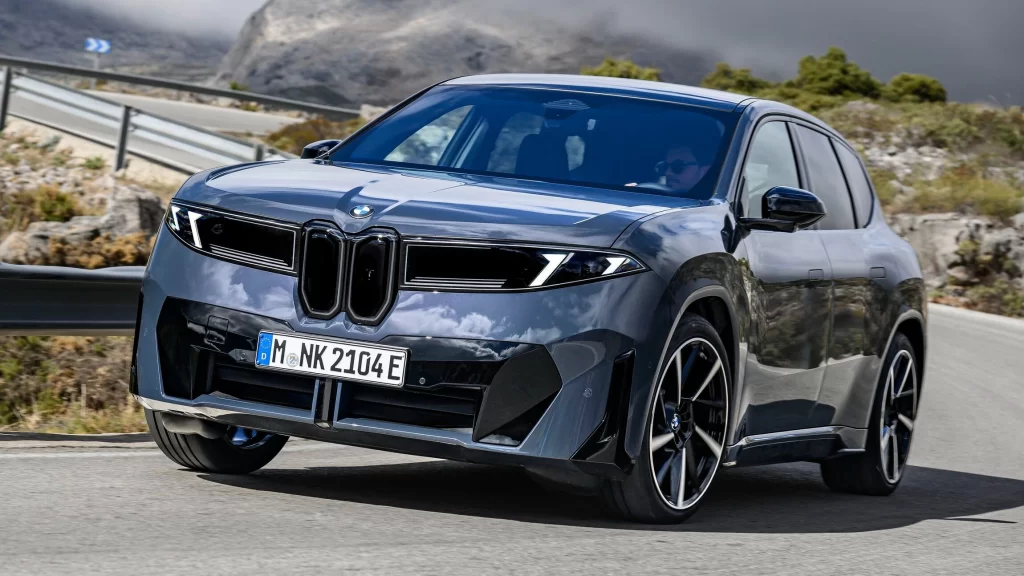
CO₂ emissions: 0 g/km (tailpipe)
Official range: 500 miles WLTP
Real-world range: approximately 375–450 miles
Starting price: from approximately £55,000
The BMW iX3 is the headline act of 2026’s electric car market, and for good reason. Built on BMW’s all-new Neue Klasse platform, it bears almost nothing in common with its predecessor — this is a ground-up electric SUV, not a combustion car with a battery bolted in. Its 108 kWh battery and 500-mile official range make range anxiety a thing of the past for the vast majority of UK drivers, and its 400 kW DC charging capability means a substantial top-up takes minutes rather than hours.
What Car? named it their Car of the Year for 2026, and it’s easy to see why. The iX3 is comfortable over longer motorway runs, spacious enough for families, and refined enough to feel genuinely premium. The old argument that going electric means compromising no longer applies here.
Who it’s for: Drivers covering serious weekly distances who want to charge once a week and forget about it.
-
Toyota Yaris Hybrid — Most Efficient Petrol-Electric Hatchback
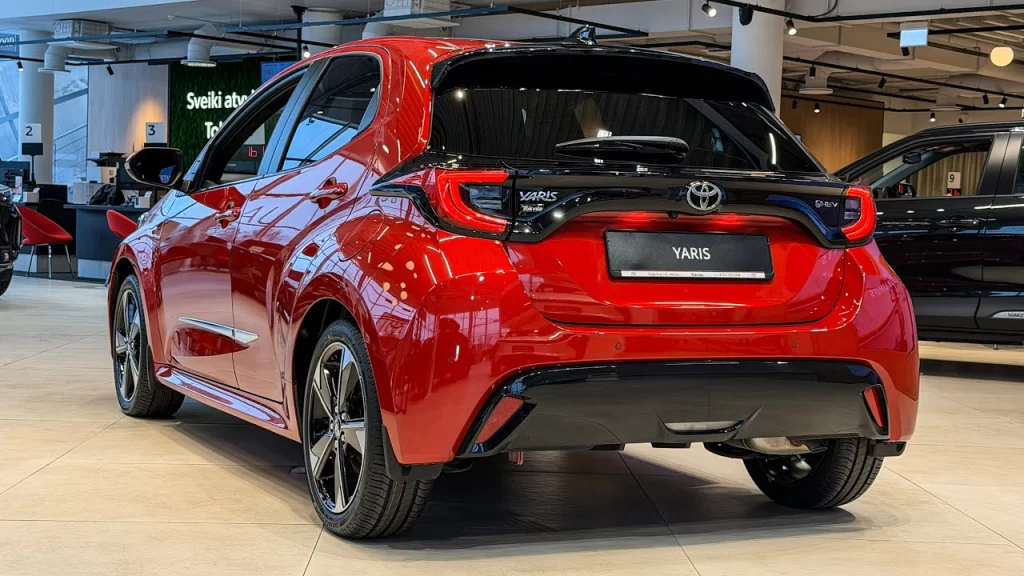
CO₂ emissions: from 84 g/km
Official fuel economy: up to 68.9 mpg WLTP
Starting price: from approximately £24,000
Toyota pioneered mass-market hybrid technology with the Prius, and the Yaris hybrid is arguably the most refined expression of that expertise in a compact package. The 1.5-litre powertrain can run on electric power alone for up to 80% of urban journeys, and can sustain electric-only driving up to 80 mph before the petrol engine kicks in — an unusually capable system for a supermini.
In real-world conditions, 55–65 mpg is genuinely achievable without any special effort, making running costs predictably low. There’s no plug required, so it suits drivers who park on the street or don’t have access to home charging. Reliability has also been a Toyota hallmark — the brand’s 10-year warranty on certain models underscores that confidence.
Who it’s for: Urban and suburban drivers who want a fuss-free, low-cost-to-run everyday car without touching a charger.
-
Renault Clio E-Tech Full Hybrid — Cleanest Mainstream Hatchback
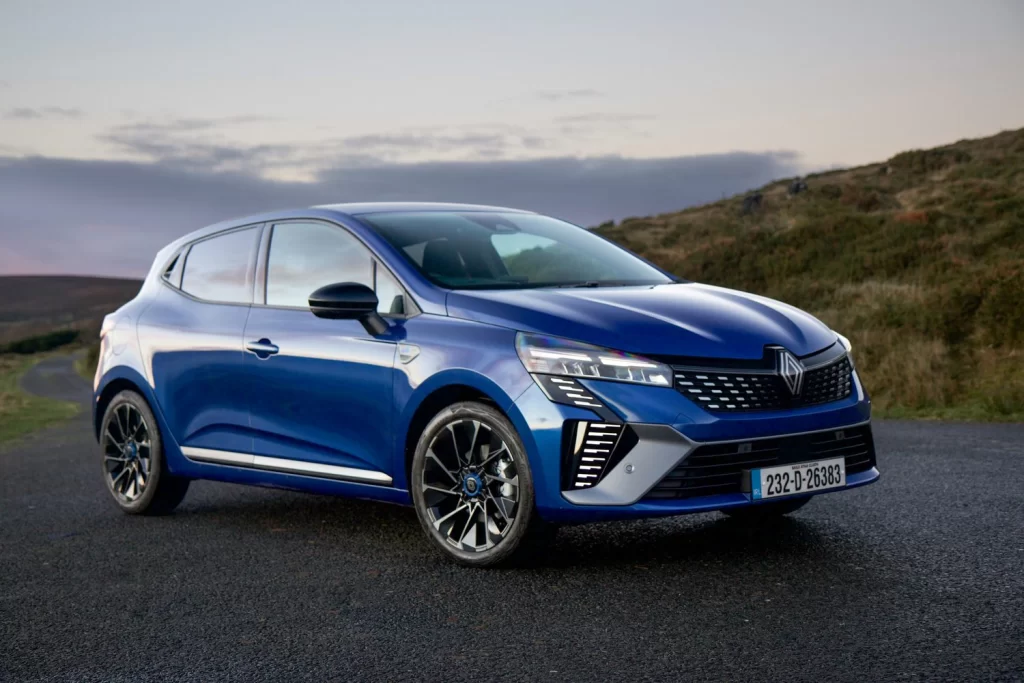
CO₂ emissions: from 95 g/km
Official fuel economy: up to 67.3 mpg WLTP
Starting price: from approximately £23,000
The Renault Clio has long been one of the UK’s best-selling small cars, and the E-Tech full hybrid version adds a compelling environmental case to what was already a stylish, practical package. Its 1.6-litre petrol engine and multi-mode electric powertrain achieve up to 67.3 mpg in official testing without any need to plug in — and because the system is genuinely effective at switching between power sources in urban traffic, real-world figures hold up well.
CO₂ output from 95 g/km is among the lowest for a self-charging hybrid in the small car segment, and the interior is noticeably more grown-up than earlier generations. If you want low emissions at a mainstream price point and can’t or won’t plug in, the Clio E-Tech is the benchmark.
Who it’s for: Buyers who want a stylish, efficient hatchback without the cost or logistics of charging.
-
Kia Niro Plug-In Hybrid — Best PHEV for Everyday Eco Driving
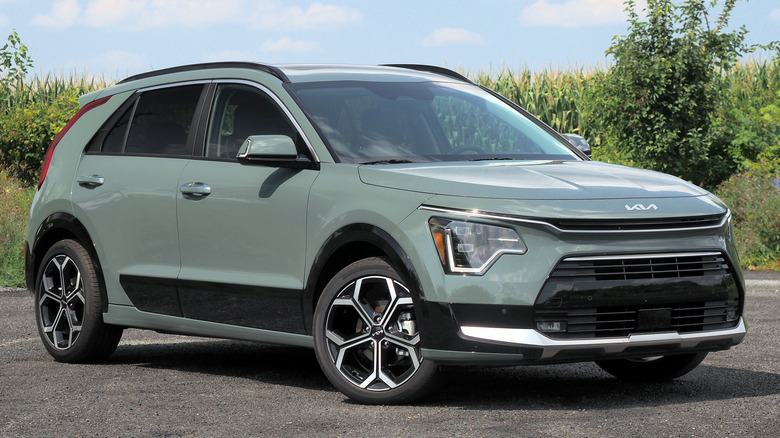
CO₂ emissions: from 18 g/km (PHEV)
Electric-only range: over 40 miles
Official fuel economy: up to 64 mpg (hybrid mode)
Starting price: from approximately £32,000
The Kia Niro stands out because it’s available in three different eco-friendly flavours — self-charging hybrid, plug-in hybrid, and fully electric — but for most UK drivers who want the lowest possible emissions without fully committing to an EV, the plug-in hybrid is the sweet spot.
With an electric-only range of over 40 miles, most daily commutes and school runs happen on battery power alone, producing zero tailpipe emissions for those journeys. CO₂ output falls as low as 18 g/km on official figures, which also makes it highly attractive as a company car given the low BIK tax liability. The Niro’s practical SUV body, partially recycled interior materials, and Kia’s seven-year warranty add to an already compelling package.
Who it’s for: Company car drivers and eco-conscious families with access to a home or workplace charger.
-
Volkswagen Golf eHybrid — Cleanest Family Hatchback
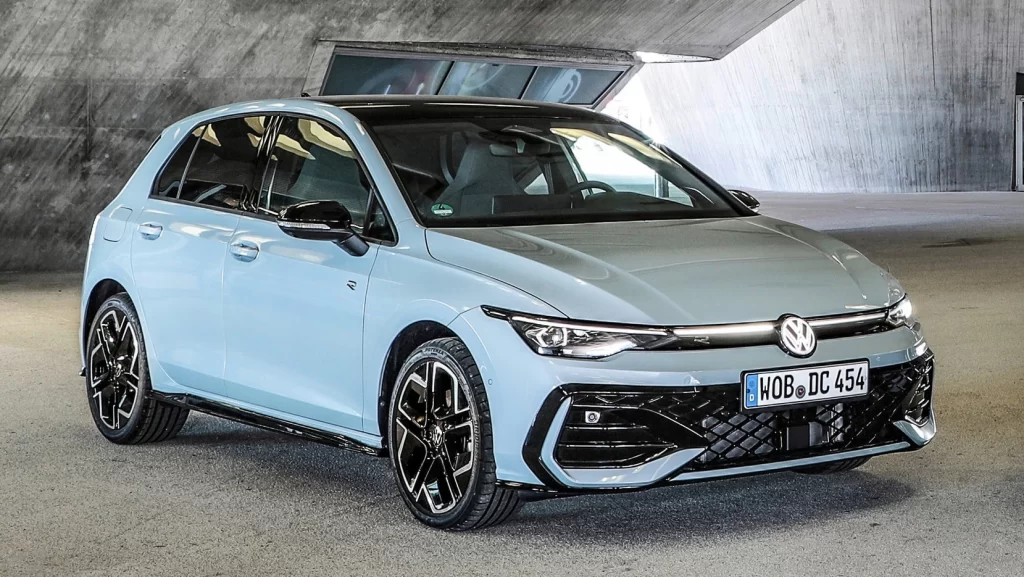
CO₂ emissions: from 21 g/km (eHybrid PHEV)
Electric-only range: up to 44 miles
Official fuel economy: up to 282 mpg WLTP (PHEV combined cycle)
Starting price: from approximately £34,000
The Golf has defined the family hatchback segment for five decades, and in 2026 the eHybrid variant makes an exceptionally strong case as the greenest version of an already excellent car. Emissions of just 21 g/km place it among the cleanest plug-in hybrids in its class, and its 44-mile electric-only range comfortably covers the average UK daily commute without touching the petrol engine.
The real-world balance here is notable: when the battery is depleted, the Golf eHybrid’s petrol powertrain is frugal and refined rather than strained — a criticism sometimes levelled at plug-in hybrids with undersized engines. Interior quality is high, the infotainment is mature, and the Golf name means strong resale values. For families who want to significantly reduce their carbon footprint without moving to a pure EV, this is the most rounded option in the class.
Who it’s for: Families wanting to cut daily emissions to near-zero on typical journeys while retaining long-distance flexibility.
-
Tesla Model 3 — Best Value Long-Range EV
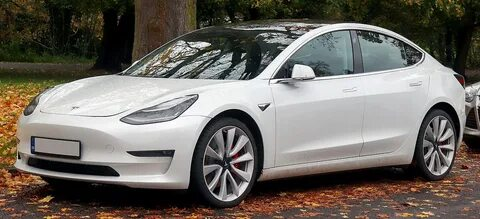
CO₂ emissions: 0 g/km (tailpipe)
Official range (Long Range): 466 miles WLTP
Real-world efficiency: approximately 3.7 miles per kWh
Starting price: from approximately £39,000
No eco-friendly car list in 2026 is complete without a Tesla, and the Model 3 remains the benchmark for EV efficiency at a non-luxury price point. Auto Express testing found the Model 3 consistently outperforms rivals in real-world energy consumption — it averaged 3.7 miles per kilowatt hour in independent testing, a figure that beats most of its direct competition.
The Long Range version’s 466-mile official range translates to confident real-world coverage on motorway runs, and access to Tesla’s Supercharger network — still the most extensive rapid-charging infrastructure in the UK — removes the friction of public charging that affects many EV buyers. The updated interior, improved build quality, and competitive pricing round out what remains one of the most complete zero-emission propositions on the market.
Who it’s for: Buyers who cover longer distances, want zero tailpipe emissions, and value a mature, established charging network.
Quick Comparison: Eco-Friendly Cars at a Glance
|
Car |
Type | CO₂ (g/km) | Range / Economy | Starting Price |
|
BMW iX3 |
Full EV |
0 |
500 miles WLTP |
~£55,000 |
|
Toyota Yaris Hybrid |
Full hybrid |
84 |
68.9 mpg WLTP |
~£24,000 |
|
Renault Clio E-Tech |
Full hybrid |
95 |
67.3 mpg WLTP |
~£23,000 |
|
Kia Niro PHEV |
Plug-in hybrid |
18 |
40+ miles EV |
~£32,000 |
|
VW Golf e Hybrid |
Plug-in hybrid |
21 |
44 miles EV |
~£34,000 |
| Tesla Model 3 | Full EV | 0 | 466 miles WLTP |
~£39,000 |
Prices are approximate as of June 2026 and subject to change. Always confirm with manufacturer or dealer.
Hybrid vs Electric: Which Should You Choose?
The right answer depends almost entirely on your charging situation and daily mileage pattern.
If you have a driveway and can charge at home, a plug-in hybrid or full EV will deliver the lowest running costs and emissions. If you don’t have home charging access, a self-charging hybrid — like the Yaris or the Clio E-Tech — is the more practical choice: no range anxiety, no dependency on the public charging network, and still a significant step down in fuel costs and emissions compared to a conventional petrol car.
For company car drivers, the numbers are stark: PHEVs emitting below 50 g/km attract dramatically lower BIK rates, which can make a significant difference to monthly take-home pay. The Kia Niro PHEV and VW Golf eHybrid both sit in attractive BIK bands for 2026/27.
Thinking of Shipping Your Eco-Friendly Car Abroad?
If you’re relocating overseas — whether to Australia, Dubai, Canada, the USA, or elsewhere in Europe — many of our customers ship their EV or hybrid rather than sell and rebuy at their destination. Modern EVs and PHEVs ship well in containers, with standard precautions around battery charge levels (typically between 20% and 30% for sea freight). Battery electric vehicles are increasingly accepted on RoRo vessels too, though carrier policies vary by route.
If you’re considering shipping your eco-friendly car from the UK, we’d recommend getting an international car shipping quote as early as possible — lead times on popular routes can extend to several weeks, particularly during peak relocation seasons.
FAQs: Eco-Friendly Cars 2026
What is the most eco-friendly car you can buy in the UK in 2026?
A fully electric car produces zero tailpipe emissions, making it the most eco-friendly at point of use. The BMW iX3 and Tesla Model 3 are among the leading fully electric options in 2026, both producing 0 g/km CO₂ from the tailpipe. Lifecycle emissions depend on the electricity source used to charge them.
Is a hybrid or electric car better for the environment?
A fully electric car charged on renewable energy produces the lowest lifetime emissions. However, a plug-in hybrid used primarily on electric power for short journeys can come close in everyday use. Self-charging hybrids produce more emissions than either, but significantly less than a conventional petrol car.
Do eco-friendly cars hold their value?
It varies by model. Mainstream, sensibly priced EVs and hybrids from established brands (Toyota, Kia, Volkswagen) tend to hold value better than very expensive luxury EVs. Tesla pricing movements can also affect residual values for the Model 3 and Model Y in the used market.
Can you ship an electric car abroad from the UK?
Yes. Electric vehicles and hybrids can be shipped internationally from the UK via container or RoRo shipping. There are specific requirements around battery state of charge for sea freight — carriers typically require EVs to be charged to between 20% and 30%. Get a quote for your specific route.
What are the best eco-friendly cars for company car drivers in 2026?
Plug-in hybrids with CO₂ emissions below 50 g/km attract the lowest Benefit-in-Kind (BIK) tax rates. The Kia Niro PHEV (from 18 g/km) and Volkswagen Golf eHybrid (from 21 g/km) are strong options. Fully electric cars attract a 3% BIK rate for 2025/26, rising to 4% in 2026/27 — making them highly attractive for company use.


