



Car Shipping to Spain from the UK: The Complete Guide
Shipping a car from the UK to Spain involves choosing between RoRo sea freight (from £495, 3–16 days depending on port), dedicated container, or road transport. Post-Brexit, most UK-origin vehicles pay 0% customs duty under the UK-EU Trade and Cooperation Agreement. Spanish Import IVA of 21% applies unless you qualify for the Transfer of Residence exemption. All imported vehicles must pass Spain’s ITV inspection before registration.
Why Shipping a Car to Spain Requires More Planning Than It Used To
Spain is the most popular destination for UK expatriates in Europe. Over 300,000 British nationals live there permanently, and many more own holiday homes along the Costas and in the Balearic Islands. After Brexit, shipping a car from the UK to Spain changed significantly — the process now involves customs formalities, potential tax liabilities, and a mandatory technical inspection that previously did not apply to UK residents moving within the EU.
This guide explains every stage of the process: how to choose the right shipping method, which Spanish port to target based on your destination, what post-Brexit customs rules actually mean in practice, and how to navigate the ITV and DGT registration process once your vehicle arrives. It draws on the practical knowledge built up across ShipCars Ltd’s decade of shipping vehicles between the UK and Spain.
If you already know which service you need, you can go straight to the car shipping to Spain service page or get a free instant quote.
How Can I Ship a Car from the UK to Spain?
There are four distinct ways to move a vehicle from the UK to Spain. The best option depends on your vehicle’s condition, your budget, your timeline, and how important door-to-door delivery is to you.
1. RoRo (Roll-on/Roll-off) Sea Freight
RoRo is the most cost-effective and widely used method for shipping a running car to Spain. Your vehicle is driven onto a specialist car carrier vessel at a UK port and driven off at the Spanish destination port. The car travels secured in the ship’s vehicle deck — exposed but well-protected by the vessel structure.
- Best for: Standard driveable cars, 4x4s, SUVs, and motorcycles where cost is the priority
- Starts from: £495 to northern Spain
- Transit: 3–16 days depending on destination port
- Requirement: Vehicle must be fully driveable; fuel tank no more than quarter full; empty of personal belongings
2. Container Shipping (FCL)
Full Container Load (FCL) container shipping places your vehicle inside a sealed 20ft or 40ft steel container. It offers significantly more physical protection than RoRo — the vehicle is isolated from salt spray, handling equipment, and other vehicles. This is the preferred method for classic cars, luxury vehicles, electric vehicles with large battery packs, and non-running cars that need maximum protection.
- Best for: Classic, luxury, and high-value vehicles; non-runners requiring enclosed protection
- Transit: Broadly similar to RoRo on the UK–Spain route, but sailing schedules may differ
- Requirement: Works for both runners and non-runners; vehicle is loaded into the container at origin
For a detailed comparison, see RoRo car shipping and container car shipping.
3. Trade Plate Driver (Road — Driveaway Service)
A professional driver collects your car from your UK address and drives it directly to your Spanish destination using trade plates, crossing via a Channel port or the Tunnel. It is the fastest door-to-door option and the most practical for non-runners (which are winched onto a small trailer at collection).
- Best for: Urgent shipments; non-runners where sea freight scheduling doesn’t suit; clients who want a single point of contact from door to door
- Transit: 5–7 days door-to-door
- Note: Adds approximately 1,200 miles to the vehicle’s odometer
4. Multi-Car Transporter (Road — Shared Service)
Your vehicle is loaded onto a large multi-car transporter truck alongside other vehicles and transported through the depot network to a Spanish hub, then delivered onward. It is the most budget-friendly road option but carries the longest transit time of any method due to consolidation at depots.
- Best for: Standard driveable cars where cost matters and the timeline is flexible (2–4 weeks)
- Requirement: Vehicle must be fully driveable; not suitable for non-runners
5. Dedicated Single Transporter (Road — Premium Service)
Your vehicle is the only cargo on a single-vehicle trailer for the entire journey, door to door. It offers the highest level of protection on the road, zero risk of contact with other vehicles, and works for both runners and non-runners.
- Best for: High-value classics, vehicles under restoration, accident-damaged cars requiring zero added mileage
- Transit: 7–10 days door-to-door
Method Comparison at a Glance
| Method | Transit Time | Indicative Cost | Runners Only? | Mileage Added |
|---|---|---|---|---|
| RoRo sea freight | 3–16 days (port to port) | From £495 | Yes | Zero |
| Container (FCL) | Similar to RoRo | Higher — contact for quote | No | Zero |
| Trade plate driver | 5–7 days door-to-door | Mid-range | No | ~1,200 miles |
| Multi-car transporter | 2–4 weeks door-to-door | Most cost-effective (road) | Yes | Zero |
| Dedicated single transporter | 7–10 days door-to-door | Premium | No | Zero |
All costs are indicative, UK port/collection to Spanish port/delivery, excluding Spanish import taxes. Get a personalised quote for your specific vehicle and route.
Which Spanish Port Should My Car Arrive At?
ShipCars operates RoRo and container services to four Spanish ports. The right port for your vehicle depends entirely on where in Spain your vehicle needs to be — choosing the wrong one adds unnecessary inland transport cost and delay.
Port of Santander — Northern Spain and the Meseta

The Port of Santander sits on the Cantabrian coast with direct motorway access towards Burgos (155 km) and Madrid (390 km). It is the best-connected Bay of Biscay port for onward road transport into the Spanish interior and serves the whole of Cantabria, western Asturias, and Castile and León. Brittany Ferries also operates passenger routes from Portsmouth and Plymouth to Santander, making it familiar to UK drivers.
- RoRo from: £545 | Transit: ~3 days | Sailings: 3× per month
- Best for: Cantabria, western Asturias, Castile and León, Madrid, and south-central Spain
- Service page: Car Shipping to Santander
Port of Pasajes — Eastern Basque Country and Navarre

The Port of Pasajes (Pasaia in Basque) is located on the Bay of Biscay in the Basque Country, close to San Sebastián in the province of Gipuzkoa. It is a major commercial vehicle import port serving eastern Basque Country, Navarre (Pamplona, 80 km), and La Rioja.
- RoRo from: £550 | Transit: ~5 days | Sailings: 3× per month
- Best for: San Sebastián, eastern Basque Country, Navarre, La Rioja, and eastern Cantabria
- Service page: Car Shipping to Pasajes
Port of Valencia — Eastern Mediterranean Spain
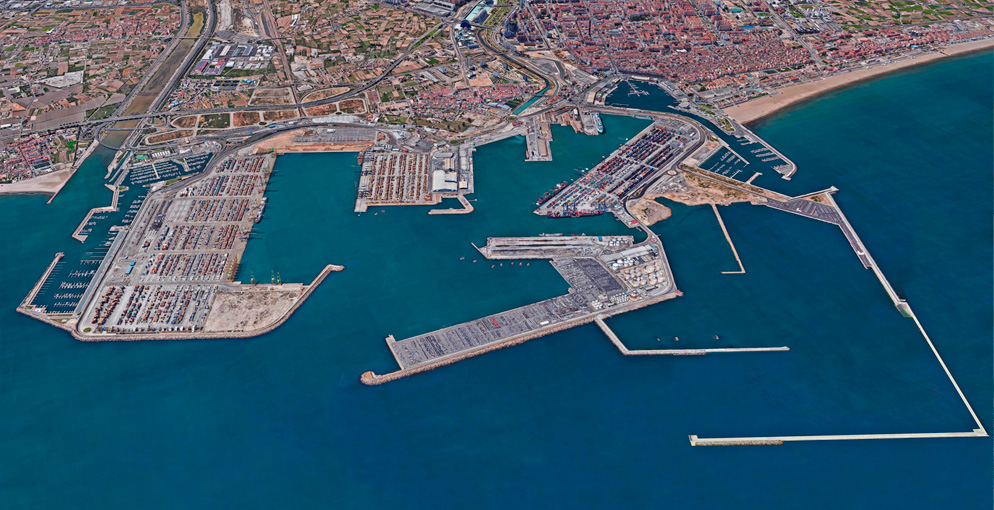
The Port of Valencia is one of the largest and busiest commercial ports on the Mediterranean, handling extensive vehicle import traffic for the Valencia region, Murcia, Alicante, and southern Mediterranean Spain. It serves the Costa Blanca, Costa del Sol, and the Balearic Islands via onward ferry connections.
- RoRo from: £665 | Transit: ~16 days | Sailings: 3× per month
- Best for: Valencia city, Alicante, Murcia, Costa Blanca, and Mediterranean Spain broadly
- Service page: Car Shipping to Valencia
Port of Sagunto — Valencia Region (Industrial Port)
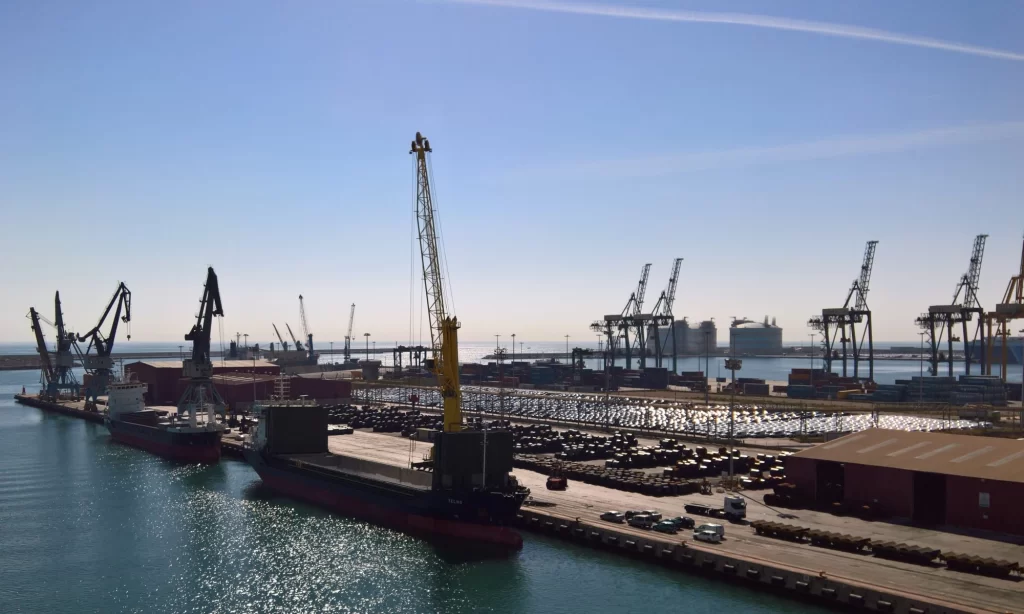
The Port of Sagunto lies approximately 25 km north of Valencia city on the Mediterranean coast, within the Port of Valencia Authority. It handles significant vehicle and industrial cargo for the Valencia region and southern Aragon. Transit times from the UK are slightly shorter than to Valencia city owing to the port’s northern position on the approach route.
- RoRo from: £740 | Transit: ~11 days | Sailings: 3× per month
- Best for: Northern Valencia region, Castellón, and southern Aragon
- Service page: Car Shipping to Sagunto
Quick Port Selector: Which Port Is Right for You?
| Your destination in Spain | Best port | RoRo from | Transit |
|---|---|---|---|
| Cantabria, Asturias, Burgos, Madrid, Salamanca | Santander | £545 | ~3 days |
| San Sebastián, Pamplona, Bilbao, Logroño | Pasajes | £550 | ~5 days |
| Castellón, northern Valencia region | Sagunto | £740 | ~11 days |
| Valencia city, Alicante, Murcia, Costa Blanca | Valencia | £665 | ~16 days |
| Costa del Sol, Málaga, Seville | Valencia or Santander — ask ShipCars for advice | — | — |
Costs are indicative for a standard small car, UK port to Spanish port only. Sailings depart 3 times per month from the UK. View the current sailing schedule.
How Much Does It Cost to Ship a Car from the UK to Spain?
The total cost of shipping a car from the UK to Spain has two distinct components: the shipping charge (what you pay ShipCars) and the Spanish import taxes (what you pay in Spain). Understanding this distinction upfront avoids budgeting surprises.
UK Shipping Costs (What ShipCars Charges)
ShipCars’ shipping quote covers: UK collection or delivery to UK port, UK port handling and export documentation, ocean freight to the Spanish port, and Bill of Lading. The following are indicative starting prices for a standard small car:
| Service | Destination | From |
|---|---|---|
| RoRo sea freight | Santander | £545 |
| RoRo sea freight | Pasajes | £550 |
| RoRo sea freight | Valencia | £665 |
| RoRo sea freight | Sagunto | £740 |
| Road transport (general Spain) | Any Spanish address | From £495 + varies by method |
Larger vehicles (4x4s, SUVs, vans, motorhomes) attract higher rates based on length and height. Container shipping prices depend on vehicle dimensions and container type — contact ShipCars for FCL pricing.
Marine Insurance
Marine insurance is strongly recommended for any shipment. ShipCars offers two levels of cover:
- Total Loss cover: 1% of declared vehicle value — covers destruction by fire or water
- Comprehensive cover: 1.5% of declared vehicle value — also covers cosmetic damage. Available for vehicles under 10 years old. A pre-shipment condition report is required (free if ShipCars collects; £35 if the vehicle is self-delivered to the port).
Spanish Import Taxes (Payable in Spain — Not Included in Ship Cars’ Quote)
These are the costs that catch people off-guard. They are levied by the Spanish authorities and collected in Spain, not by ShipCars:
- Spanish Import IVA (VAT): 21% of the vehicle’s declared market value (CIF — cost including freight and insurance). Applies to UK residents permanently importing a vehicle to Spain. A full exemption is available under the Transfer of Residence concession (see below).
- Customs Duty: 0% for most UK-origin vehicles under the UK-EU Trade and Cooperation Agreement (provided UK origin is evidenced by the V5C logbook). The standard 10% rate applies only to vehicles manufactured outside the UK or EU that cannot prove qualifying origin. Verify with a licensed customs agent if your vehicle was assembled elsewhere.
- Spanish customs clearance agent fees (agente de aduanas): Typically a few hundred pounds — payable to the agent you appoint to handle Spanish customs formalities.
Example cost liability: on a £20,000 vehicle, 21% IVA = £4,200. The Transfer of Residence exemption eliminates this entirely for qualifying relocators. Source: Agencia Tributaria (AEAT) — verify current rates before shipping.
Post-Brexit Car Import Rules: What UK Drivers Need to Know
Since 1 January 2021, the UK is no longer part of the EU. Moving a car from the UK to Spain now triggers customs formalities that did not exist before Brexit. The rules differ significantly depending on whether you are making a temporary stay or permanently relocating.
Temporary Stays in Spain (Under 6 Months)
If you are bringing your UK-registered car to Spain for a holiday, short-term work, or a seasonal stay of less than six months in any 12-month period, the process is straightforward:
- Your UK registration and UK driving licence remain valid in Spain.
- You must carry the original V5C logbook, a valid UK insurance certificate, and a Green Card from your UK insurer proving EU cover.
- A UK sticker must be displayed on the rear of the vehicle when driving in Spain.
- No customs duties or IVA apply — the vehicle is not being permanently imported.
Permanent Relocation or Long-Term Stays (Over 6 Months)
If you intend to stay in Spain for more than six consecutive months, you are legally required to permanently import and re-register your vehicle. The full process involves:
- Customs clearance at the arrival port: handled by your appointed agente de aduanas. IVA and duty are declared and paid (or exemption applied for) at this stage.
- ITV inspection: the vehicle must pass Spain’s ITV test (equivalent to the UK MOT) at an approved estación ITV. Most UK cars pass without modification. Headlights must be adjusted or beam deflectors fitted before the test.
- DGT registration: after passing ITV, register the vehicle with the Dirección General de Tráfico and obtain Spanish number plates.
- Notify UK DVLA: post the V5C/2 section of your logbook to the DVLA to record the permanent export from the UK. Official guidance: GOV.UK — Taking a vehicle out of the UK.
NIE Number — Required for Vehicle Registration
A NIE (Número de Identidad de Extranjero) — Spain’s foreign identity number — is mandatory for registering a vehicle with the DGT and for all legal and financial transactions in Spain. Apply through the nearest Spanish consulate in the UK before departure, or through the Oficina de Extranjeros after arrival. Without a NIE, DGT registration cannot proceed.
The Transfer of Residence (ToR) IVA Exemption
The single most financially significant decision in the whole process. If you are permanently relocating to Spain, the Transfer of Residence (Cambio de Residencia) concession can eliminate Spanish IVA (21%) on your vehicle entirely. Eligibility criteria:
- You must be permanently establishing your primary residence in Spain (not a holiday home).
- The vehicle must have been registered in your name and used by you for at least 6 months before departure from the UK.
- You must have lived outside Spain for at least 12 consecutive months before establishing Spanish residency.
- You must apply to the Agencia Tributaria for ToR authorisation before the vehicle arrives in Spain — retrospective applications are not accepted.
- One vehicle per person qualifies for the exemption.
On a £20,000 vehicle, the ToR exemption saves £4,200. Apply through the Agencia Tributaria (agenciatributaria.gob.es) well in advance — the process can take several weeks. A licensed agente de aduanas in Spain can manage the application on your behalf as part of the customs clearance process.
Disclaimer: customs rules and tax rates are subject to change. Verify current rates and ToR eligibility with the Agencia Tributaria and a licensed customs agent before shipping.
Documents Checklist for Shipping a Car to Spain from the UK
Incomplete or incorrect documentation is the most common cause of delay and additional costs when shipping a car to Spain. Use this checklist to ensure everything is in order before your vehicle is collected.
Before the Vehicle Leaves the UK
- ✓ Original V5C logbook — confirms ownership and UK vehicle origin (critical for 0% duty claim)
- ✓ Valid passport or driving licence — proof of identity
- ✓ Proof of ownership — purchase invoice if recently acquired
- ✓ Green Card from your UK insurer — proof of EU insurance cover for driving in Spain
- ✓ Proof of UK address — utility bill or bank statement under 3 months old
- ✓ ToR authorisation from AEAT — if claiming Transfer of Residence IVA exemption (obtain before shipment)
- ✓ DVLA V5C/2 export section posted — for permanent exports from the UK
At Spanish Customs (Handled by Agente de Aduanas)
- ✓ Original Bill of Lading — issued by the shipping line; essential for customs release
- ✓ Original V5C logbook
- ✓ Commercial invoice or declared market value statement
- ✓ Certificate of marine insurance
- ✓ Copy of passport
- ✓ NIE number — for vehicle registration (permanent imports)
- ✓ Certificado de Empadronamiento or proof of Spanish residency (if applicable)
- ✓ ToR authorisation — if exemption applies
ShipCars manages all UK export documentation. A licensed agente de aduanas at the Spanish arrival port handles customs clearance and the subsequent ITV and DGT registration process in Spain. ShipCars can advise on reputable agents at each port.
The ITV Test and DGT Registration: What Happens After Your Car Arrives
Once your vehicle has cleared Spanish customs, two further steps are required before you can legally drive it in Spain long-term: the ITV test and DGT registration.
The Spanish ITV Test
The ITV (Inspección Técnica de Vehículos) is Spain’s vehicle roadworthiness inspection — broadly equivalent to the UK MOT, but with some differences relevant to UK cars. Key points:
- The ITV is mandatory for all permanently imported vehicles before DGT registration.
- Most modern UK-specification vehicles pass the ITV without modification. Emissions standards, safety systems, and mechanical requirements are broadly aligned.
- UK headlights are designed for left-hand traffic and will dazzle oncoming drivers on Spanish roads. Headlights must be adjusted or stick-on beam deflectors fitted before the ITV appointment. This is a common reason for UK cars failing their first ITV. Deflectors are available from UK motoring retailers before shipment or from Spanish accessory shops on arrival.
- Right-hand drive is fully legal in Spain — no steering conversion is required.
- ITV stations (estaciones ITV) operate throughout Spain’s regions. Your agente de aduanas or a local gestor can book and accompany the vehicle.
DGT Registration and Spanish Number Plates
After passing the ITV, the vehicle is registered with the Dirección General de Tráfico (DGT) to receive Spanish number plates. Required documents at this stage include the ITV certificate, customs clearance certificate, original V5C, NIE number, and proof of Spanish residency. A gestor (an administrative agent who handles Spanish bureaucracy) can manage the DGT process if you prefer not to navigate it directly.
Can I Ship a Non-Running Car from the UK to Spain?
Yes — but the method matters. Standard multi-car transporters and standard RoRo vessel loading both require vehicles to drive under their own power. If your car does not start, cannot steer, or has inoperable brakes, standard RoRo and multi-car transporter services are not available.
For non-running vehicles, ShipCars offers two solutions:
- Trade plate driver with trailer: The driver arrives with a braked trailer. Your non-runner is winched or pushed on at collection and winched off at delivery in Spain. This is the most cost-effective option for non-runners requiring door-to-door service.
- Dedicated single car transporter: Your vehicle is the sole cargo on a purpose-built trailer for the entire journey. The highest level of protection available by road — recommended for valuable project cars, classics under restoration, or vehicles where zero mileage and maximum security are essential.
- Container shipping (FCL): Non-runners can also be shipped by FCL container — the vehicle is loaded into the container using appropriate handling equipment at the UK port. Contact ShipCars for specific loading arrangements.
For classic car shipping specifically, see Ship Cars classic car shipping services.
Pre-Shipment Checklist: Before Your Car Is Collected
Complete this before collection day to prevent avoidable delays and additional charges:
- Reduce the fuel level to no more than a quarter tank (required by shipping lines for RoRo; also reduces vessel risk).
- Remove all personal belongings from inside and the boot — personal effects inside a RoRo vehicle are generally prohibited by shipping lines, and Spanish customs requires a separate declaration for any goods found inside an imported vehicle.
- Disable any aftermarket alarms or immobilisers that could trigger spontaneously during the voyage.
- Ensure the battery is in good condition — the vessel crew may need to reposition your vehicle during the voyage.
- Document the vehicle’s condition with dated photographs at all angles before handover, for insurance reference purposes.
- Fit stick-on headlamp beam deflectors if travelling to Spain and planning to drive the car on arrival before ITV adjustment.
- Confirm you have the original V5C logbook — copies are not accepted at Spanish customs.
- If claiming Transfer of Residence exemption, confirm your AEAT ToR authorisation reference is in hand before the vehicle is handed over.
Frequently Asked Questions — Car Shipping to Spain from the UK
How much does it cost to ship a car from the UK to Spain?
RoRo sea freight starts from £495 for a standard small car. Indicative costs by port: Santander from £545 (~3 days), Pasajes from £550 (~5 days), Valencia from £665 (~16 days), Sagunto from £740 (~11 days). Road transport costs vary by method. Spanish IVA (21%) and customs clearance are payable separately on arrival. Get a free instant quote for your specific vehicle and route.
How long does it take to ship a car to Spain from the UK?
RoRo transit times: Santander ~3 days, Pasajes ~5 days, Sagunto ~11 days, Valencia ~16 days. Road transport: trade plate driver 5–7 days door-to-door; dedicated single transporter 7–10 days; multi-car transporter 2–4 weeks. Allow additional time for UK collection, Spanish port handling, and customs clearance on arrival.
Do I need to pay import duty when shipping a car from the UK to Spain?
Most UK-origin vehicles qualify for 0% customs duty under the UK-EU Trade and Cooperation Agreement. Your V5C logbook is the primary evidence of UK origin. The standard 10% duty applies only to vehicles that cannot demonstrate UK or EU manufacturing origin. Spanish IVA (21%) is a separate charge — see the Transfer of Residence section above for how to avoid it if you are relocating permanently.
Which port should I ship my car to in Spain?
Santander for northern and central Spain (Madrid, Burgos, Cantabria). Pasajes for eastern Basque Country (San Sebastián), Navarre, and La Rioja. Sagunto for northern Valencia region and Castellón. Valencia for Valencia city, Alicante, the Costa Blanca, and broader Mediterranean Spain. ShipCars can advise on the optimal port for your specific address.
What documents do I need to ship a car to Spain?
Original V5C logbook, valid passport, proof of ownership (purchase invoice), and Green Card from your UK insurer. For permanent import: original Bill of Lading, commercial invoice, marine insurance certificate, NIE number, and Transfer of Residence authorisation (AEAT) if applicable.
What is the ITV test and does my UK car need it?
The ITV (Inspección Técnica de Vehículos) is Spain’s vehicle roadworthiness test, equivalent to the UK MOT. All permanently imported vehicles must pass before DGT registration. Most modern UK cars pass without modification. Headlights must be adjusted or beam deflectors fitted before the test — a common reason for UK cars failing first attempt.
Can I ship a non-running car from the UK to Spain?
Yes, via trade plate driver with trailer, dedicated single car transporter, or FCL container. Standard multi-car transporters and standard RoRo vessel loading require fully driveable vehicles. Contact ShipCars to discuss non-runner options.
Do I need to re-register my UK car in Spain?
Yes, for stays longer than 6 months. After ITV inspection, the vehicle must be registered with the DGT (Dirección General de Tráfico) and issued Spanish number plates. For stays under 6 months, UK registration remains valid provided you carry the V5C, UK insurance, and a Green Card.
What is the Transfer of Residence (ToR) exemption and how do I apply?
The Transfer of Residence (Cambio de Residencia) exemption waives Spanish IVA (21%) for qualifying permanent relocators. Eligibility: permanently moving primary residence to Spain; vehicle owned and used for 6+ months before departure; lived outside Spain for 12+ consecutive months. Apply at agenciatributaria.gob.es before the vehicle arrives. One vehicle per person. A licensed agente de aduanas can manage the application.
Can I include personal belongings in my car when shipping to Spain?
Personal effects inside a vehicle shipped by RoRo are generally restricted or prohibited by shipping lines. For container shipping, limited personal effects may be permitted if correctly declared to Spanish customs with a detailed inventory. Contact ShipCars to confirm the specific rules for your booking before placing any items inside the vehicle.
Ready to Ship Your Car to Spain?
ShipCars Ltd has been handling UK-to-Spain vehicle shipments for over a decade. Whether you are relocating, moving a holiday-home car, or importing a vehicle for commercial purposes, our team handles every detail — from UK collection through to customs guidance at the Spanish port.
Get a Free Instant Quote — or contact ShipCars for tailored advice on ports, methods, and Spanish import costs.
Explore Further
- Car Shipping to Spain — Service Page (prices, booking, and full service details)
- Car Shipping to Santander — northern Spain’s main RoRo port
- Car Shipping to Pasajes — Bay of Biscay, Basque Country
- Car Shipping to Valencia — Mediterranean eastern Spain
- Car Shipping to Sagunto — Valencia region, northern approach
- RoRo Car Shipping Explained
- Container Car Shipping
- Classic Car Shipping UK
- Customs Clearance Guidance
- RoRo Sailing Schedule
- International Car Shipping Costs
Published: 21 October 2026 | Last updated: 21 October 2026 | Reviewed by: Navdeep Singh, Director, ShipCars Ltd


