


Importing a Car to the UK: Duty, IVA Test, ToR Relief and DVLA Registration (2026)
Importing a car to the UK from abroad requires paying 10% customs duty and 20% VAT on arrival — a combined tax of approximately 30% of the vehicle’s value for most buyers. Qualifying returnees can eliminate both under Transfer of Residence (ToR) relief, saving up to £14,000+ on a high-value vehicle. Vehicles over 30 years old pay 0% duty and 5% VAT as historic vehicles. Cars without UK or EU type approval require an Individual Vehicle Approval (IVA) test before DVLA registration. ShipCars manages the shipping and UK port arrival — the customs, IVA, and registration process is completed after the vehicle arrives.
Who This Guide Is For
This guide covers the UK-side process for anyone importing a vehicle into the United Kingdom from abroad — the customs, duty, and registration steps that happen once your car arrives at the UK port or through UK customs.
Whether you are:
- A returning UK resident bringing back a car you owned abroad
- A classic car collector importing a vehicle from the USA, Japan, or Europe
- An expat returning home and using Transfer of Residence relief
- A dealer or buyer purchasing a vehicle from an overseas market
- Someone relocating to the UK from anywhere in the world
…the UK customs and registration process follows the same core framework. What varies is the duty rate — which depends on the vehicle’s origin, age, and value — and whether you qualify for any duty relief.
For source-specific import guides (USA to UK, Japan to UK, Australia to UK, etc.) see the ShipCars import routes hub.
Understand the UK Import Duty and VAT Structure
The Standard Duty and VAT Position
Most vehicles imported into the UK from outside the UK are subject to:
Import Duty: 10% of the vehicle’s customs value (CIF) CIF stands for Cost + Insurance + Freight — it is the price you paid for the car plus the cost of shipping it to the UK border plus any insurance. Duty is calculated on this combined figure, not just the purchase price.
VAT: 20% of the duty-inclusive customs value VAT is applied to the CIF value plus the import duty. This means VAT is effectively charged on top of duty.
Worked example on a £20,000 car:
| Cost element | Calculation | Amount |
|---|---|---|
| Vehicle purchase price | — | £20,000 |
| Shipping to UK (example) | — | £1,500 |
| Insurance | — | £200 |
| CIF value | £20,000 + £1,500 + £200 | £21,700 |
| Import duty (10%) | 10% of £21,700 | £2,170 |
| VAT (20%) | 20% of (£21,700 + £2,170) | £4,774 |
| Total UK import tax | Duty + VAT | £6,944 |
This is the standard position. The sections below explain the significant exceptions that can reduce or eliminate this liability.
Duty Rates That Differ From the Standard 10%
EU-manufactured vehicles: potentially 0% duty Cars manufactured in the EU — BMW, Mercedes, Volkswagen, Audi, Renault, Peugeot, and others — can qualify for 0% customs duty under the UK-EU Trade and Cooperation Agreement (TCA). However, the zero rate is not automatic. The seller or exporter must hold a valid exporter reference number and provide an origin declaration. Private sellers in the EU rarely hold this — meaning most private purchase imports of EU cars pay full 10% duty. Commercial dealers who regularly export may be able to provide the origin declaration. Always confirm before purchase if the 0% rate matters to your budget.
Historic vehicles (30+ years old): 0% duty and 5% VAT Vehicles manufactured more than 30 years ago that are no longer in production qualify as historic vehicles under HMRC Tariff Commodity Code 9705. They attract 0% customs duty and a reduced 5% VAT rate (not 20%). This makes importing a classic car from the USA, Japan, or elsewhere significantly more cost-effective than importing a modern equivalent.
For a 1974 Porsche 911 with a customs value of £80,000: at standard rates the total UK tax would be approximately £24,000. At historic vehicle rates (0% duty + 5% VAT) the tax is £4,000 — a saving of £20,000 on a single vehicle. Always verify the vehicle’s manufacture date (not registration date) to confirm the 30-year threshold is met.
USA-to-UK: 6.5% duty on US-manufactured vehicles The UK-US bilateral tariff schedule sets 6.5% duty for most US-origin passenger vehicles — slightly lower than the standard 10% MFN rate. Confirm with your customs broker as rates are subject to review.
Japan-to-UK: standard 6.5% duty under UK-Japan CEPA The UK-Japan Comprehensive Economic Partnership Agreement (CEPA) sets a reduced duty rate on Japanese-manufactured vehicles. Verify the current applicable rate with HMRC or your customs broker before committing to a purchase.
All duty rates above are correct as of September 2026 and are subject to HMRC updates. Verify current rates at trade-tariff.service.gov.uk before importing.
Check Whether You Qualify for Duty and VAT Relief
Transfer of Residence (ToR) Relief — Save Up to 30% of Vehicle Value
Transfer of Residence relief is HMRC’s scheme allowing individuals who are permanently relocating to the UK to import their personal vehicle without paying import duty or VAT. It is the most significant duty relief available to private importers.
To qualify:
- You must have lived outside the UK for a minimum of 12 consecutive months immediately before moving
- The vehicle must have been owned and used by you for at least 6 months prior to your move
- You must be moving to the UK permanently — not visiting
- The vehicle must be for personal use — not for sale, hire, or commercial purposes
- HMRC approval via the ToR1 application form must be received before the vehicle arrives in the UK — retrospective claims are not accepted
What ToR relief saves: On a £25,000 car: approximately £7,500 in UK import tax. On a £50,000 car: approximately £15,000 in UK import tax.
The application process:
- Download the ToR1 form from HMRC (gov.uk → Transfer of Residence relief)
- Complete with full details of your overseas residency, the vehicle, and proof of ownership and use
- Submit to HMRC — processing typically takes 4–8 weeks, and can stretch to 12 weeks during peak summer periods
- Receive your Unique Reference Number (URN) from HMRC
- Provide the URN to ShipCars — we include it in the UK customs declaration
Your ToR URN is valid for 6 months before your move date and 12 months after arriving in the UK. Within this window, the same URN can cover multiple shipments provided all items were declared in your original ToR1 application.
After import — 12-month resale restriction: Vehicles imported under ToR relief cannot be sold, hired out, or transferred within 12 months of import. Early disposal triggers repayment of the full duty and VAT that was relieved, plus 5% interest. HMRC cross-references DVLA ownership transfers against ToR records automatically.
For the complete ToR guide: Transfer of Residence Relief — Import Your Car to the UK Duty-Free
Check Whether Your Vehicle Needs an IVA Test
What Is Individual Vehicle Approval (IVA)?
Individual Vehicle Approval (IVA) is a DVSA inspection that certifies a vehicle meets UK safety and environmental standards. It is required for vehicles that were never sold new in the UK or EU market — they do not carry a UK or EU type approval certificate.
IVA is typically required for:
- Japanese domestic market (JDM) imports — vehicles sold new in Japan for the Japanese market
- US-spec vehicles — American market vehicles with different safety standards (different headlights, bumpers, speedometers)
- Any vehicle without a UK or EU Certificate of Conformity (CoC)
- Grey import vehicles from markets with different type approval systems
IVA is NOT required for:
- Vehicles sold new in the UK (they already have UK type approval)
- EU-manufactured vehicles with a valid EU Certificate of Conformity (CoC) — CoC proves EU type approval which is accepted in the UK
- Historic vehicles over 40 years old (exempt from IVA — different process applies)
The IVA Test Process
The IVA test is carried out by the DVSA (Driver and Vehicle Standards Agency) at designated test centres across the UK.
What the test covers:
- Lighting and visibility (headlight alignment, beam pattern, indicator positions)
- Braking system (performance, anti-lock systems)
- Speedometer (must display mph or dual mph/kph)
- Tyres and wheels
- Emissions compliance (against UK/EU emission standards)
- Structural safety (body, doors, glass, mirrors)
- Seatbelts and restraints
Cost: The IVA test fee is set by the DVSA. As of 2026, a normal vehicle IVA test costs approximately £456 (basic IVA) or £550–£850 for enhanced categories. Check current fees at gov.uk → Individual Vehicle Approval.
Modifications before IVA: Many US and Japanese imports require modifications to pass IVA. Common modifications include:
- Headlight replacement or conversion (US/Japan headlights fail UK beam pattern tests)
- Speedometer replacement or addition of mph markings
- Bumper modifications (US spec bumpers often do not meet EU/UK pedestrian safety standards)
- Side marker light additions
- Seatbelt upgrades
The cost of modifications varies enormously by vehicle — from a few hundred pounds for a simple headlight swap to several thousand for full bumper modifications on an American muscle car. Get a pre-IVA assessment from a specialist before purchasing an import that will need significant work.
Booking an IVA test: Book through the DVSA at gov.uk/vehicle-approval/apply-for-individual-vehicle-approval. Allow 4–8 weeks from booking to test date. The vehicle should be in your possession and fully prepared before booking — modifications cannot be completed after the test is booked and before the appointment.
Alternatives to IVA for Certain Vehicles
Mutual Recognition Agreement (MRA) vehicles: The UK has mutual recognition agreements with some countries (including the USA for certain vehicle types) that allow vehicles meeting those countries’ safety standards to be registered without a full IVA test, subject to specific conditions. Specialist importers can advise whether your vehicle qualifies.
DVLA Age Exemptions: Vehicles manufactured before 1 August 1978 (40+ years old as of 2018) are exempt from IVA and MOT requirements. They still require registration with the DVLA.
Prepare Your Documents for UK Customs Clearance
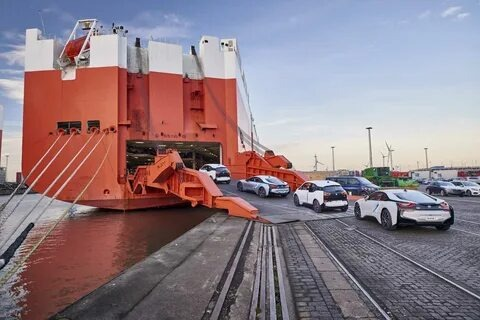
When your vehicle arrives at the UK port, Ship Cars Ltd submits the import customs declaration to HMRC on your behalf (using our Customs Declaration Service agent). You need to provide us with:
For all imports:
- Foreign vehicle registration document (the overseas equivalent of a V5C — title deed, registration certificate, etc.)
- Original purchase invoice or bill of sale showing the vehicle’s purchase price, seller details, and VIN/chassis number
- Passport copy (photo page)
- Proof of the vehicle’s country of manufacture (for duty rate determination)
- Marine insurance certificate
Additionally for ToR relief claims:
- Your HMRC-approved ToR1 Unique Reference Number (URN)
- Proof of overseas residency (utility bills, overseas bank statements, employment records)
- Proof of vehicle ownership and use abroad for minimum 6 months
Additionally for historic vehicles (0% duty claim):
- Evidence of manufacture date (manufacturer’s certificate, chassis records, or marque registrar’s letter)
- Confirmation vehicle is no longer in production
- Evidence of substantially original or unaltered condition (for antique/collector status)
Additionally for IVA-exempt vehicles or CoC holders:
- Certificate of Conformity (CoC) from the manufacturer — for EU-manufactured vehicles
- DVSA IVA certificate — if IVA test was completed before arrival
The Customs Clearance Timeline
With all documents correct and submitted before the vessel arrives:
- Standard clearance: 2–5 working days
- ToR relief claims: 5–10 working days (additional HMRC verification)
- Physical inspection by UK Border Force: adds 3–10 working days where selected
ShipCars manages the entire UK port clearance process. You do not need to attend the port.
Pay Your UK Import Duty and VAT
Duty and VAT are assessed and collected by HMRC at the point of UK customs clearance. Payment is made before the vehicle is released from the port.
How payment works: ShipCars uses a Duty Deferment Account for commercial shipments, which means duty and VAT can be deferred for approximately 30 days from the point of clearance. For private imports, duty and VAT must be paid before release.
Payment methods:
- Bank transfer to HMRC (Faster Payments or CHAPS for same-day processing)
- HMRC Direct Debit via your UK customs account (if you have one)
ShipCars will provide you with the HMRC assessment reference and payment details as soon as the customs officer completes the valuation and confirms the duty liability.
What if you believe the HMRC valuation is wrong? HMRC uses their own reference data to assess customs value. If you believe the CIF value used is incorrect — because you paid significantly less than market value, or because the vehicle has significant damage or condition issues — you can dispute the valuation with supporting evidence (purchase invoice, independent valuation, photographic evidence of condition). ShipCars can advise on the dispute process.
Complete UK Registration with the DVLA
Once your vehicle has cleared UK customs and been released from the port, the final step is registering it for UK roads.
What You Need for DVLA Registration
Take the following to your local DVLA office or process by post:
- V55/5 form — Application to Register a Vehicle (available from DVLA or main post offices)
- Original overseas registration document — your foreign equivalent of a V5C
- HMRC customs clearance certificate — C88 or E2 form confirming duty and VAT paid (or ToR relief applied)
- IVA certificate — if an IVA test was required and completed
- Certificate of Conformity (CoC) — if available (for EU-manufactured vehicles)
- Valid MOT certificate — required for vehicles over 3 years old before registration can be completed
- UK motor insurance certificate — must be in place before the vehicle can be taxed
- Payment of Vehicle Excise Duty (VED) — UK road tax, payable at DVLA or via gov.uk
- First Registration Fee — £55 DVLA fee
Registering a UK-Used Vehicle Imported Back
If you owned a UK-registered vehicle before moving abroad and are now re-importing it to the UK, the DVLA process is different. You must provide the original V5C/4 export acknowledgement and the vehicle will be allocated a new UK registration number. Contact the DVLA directly for the re-importation procedure.
MOT Before Registration
Vehicles over 3 years old require a valid MOT before DVLA registration can be completed. If your imported vehicle has not had a UK MOT:
- Arrange for the vehicle to be transported from the port to a DVSA-approved MOT test centre
- Complete any IVA-required modifications before the MOT (if IVA was needed)
- Pass the MOT
- Then proceed with DVLA registration
For vehicles imported from the USA or Japan, plan for the MOT to identify any modifications required for UK standards — this is a normal part of the process.
The Expensive Car Supplement (ECS)
If your vehicle’s original list price when new exceeded £40,000 (or £50,000 for EVs, from April 2026), it will be subject to the Expensive Car Supplement (ECS) — a fixed annual VED surcharge of £440 per year for years 2–6 of the vehicle’s life.
This is based on the original new list price in any market — not the price you paid as an importer. A classic car purchased for £20,000 with an original 1990s list price of £8,000 does not trigger ECS. A used BMW M3 with an original list price of £62,000 does trigger ECS even if you purchased it second-hand for £35,000.
ECS is charged at registration and then annually with road tax. It is not an import duty — it applies to any qualifying vehicle registered in the UK regardless of origin.
How Ship Cars Ltd Handles the Shipping Side
Ship Cars Ltd manages the international shipping from the source country to the UK port — and the UK customs declaration on arrival. Here is what we cover:
✅ International ocean freight — container or RoRo from the source country ✅ UK port handling and terminal fees ✅ UK customs import declaration (C88) submitted to HMRC ✅ Duty Deferment Account management for commercial importers ✅ Shipment tracking and customer updates throughout ✅ Coordination with UK customs broker for ToR and historic vehicle claims
ShipCars does not cover (separately arranged):
- Overseas collection from seller’s location to the departure port
- Marine insurance (available as optional add-on — strongly recommended)
- UK port-to-address delivery after customs clearance
- IVA test or modifications
- DVLA registration fees
For a free import quote: 📞 01495 320540 | 📧 info@shipcars.co.uk | Get a free quote
Import Costs at a Glance
| Import route | UK-side shipping | Standard duty + VAT | ToR relief | Historic vehicle |
|---|---|---|---|---|
| USA to UK | From £[X] | 6.5% duty + 20% VAT | Eliminates both | 0% duty + 5% VAT |
| Japan to UK | From £[X] | 6.5% duty + 20% VAT | Eliminates both | 0% duty + 5% VAT |
| Australia to UK | From £[X] | 10% duty + 20% VAT | Eliminates both | 0% duty + 5% VAT |
| EU to UK (EU-manufactured) | From £[X] | 0% duty + 20% VAT (with origin declaration) | Eliminates both | 0% duty + 5% VAT |
| EU to UK (non-EU-manufactured) | From £[X] | 10% duty + 20% VAT | Eliminates both | 0% duty + 5% VAT |
| Africa to UK | From £[X] | 10% duty + 20% VAT | Eliminates both | 0% duty + 5% VAT |
Duty rates correct as of September 2026. Verify current rates at trade-tariff.service.gov.uk. UK-side shipping costs vary by route and vehicle size — contact Ship Cars Ltd for a confirmed quote.
Source-Specific Import Guides
The UK customs framework above applies to all imports. For source-specific rules — overseas export procedures, local documentation, and specific compliance requirements — see:
- Shipping a Car from the USA to the UK
- Shipping a Car from Japan to the UK
- Shipping a Car from Australia to the UK
- Shipping a Car from Africa to the UK
- Shipping a Car from Turkey to the UK
- Shipping a Car from India to the UK
- Transfer of Residence Relief — Complete Guide
Frequently Asked Questions
How much duty do I pay when importing a car to the UK?
Most vehicles from outside the EU attract 10% customs duty on the CIF value (purchase price plus shipping and insurance). EU-manufactured vehicles can qualify for 0% duty with a valid origin declaration from the seller — though private sellers rarely hold this. Japanese and US-manufactured vehicles attract 6.5% duty under UK trade agreements. Vehicles over 30 years old pay 0% duty and 5% VAT as historic vehicles. VAT of 20% is applied on top of the duty-inclusive CIF value for all standard-rate imports.
Can I avoid paying duty when importing a car to the UK?
Yes — in two circumstances. First, under Transfer of Residence (ToR) relief, if you are permanently relocating to the UK after living abroad for at least 12 months and owned the vehicle for at least 6 months. ToR eliminates both duty and VAT. Second, if the vehicle is over 30 years old, it qualifies for 0% duty and 5% VAT as a historic vehicle. Both require HMRC approval — ToR requires a ToR1 application before the vehicle arrives.
Do I need an IVA test to register an imported car in the UK?
Only if the vehicle has no UK or EU type approval certificate. Japanese domestic market cars and US-specification cars almost always require an IVA test. EU-manufactured cars with a valid Certificate of Conformity (CoC) do not need an IVA test. UK-market cars (if re-imported) do not need an IVA test. Vehicles manufactured before 1 August 1978 are exempt from IVA.
How long does it take to import a car to the UK?
Total time from overseas purchase to driving the car on UK roads depends on the source country. Shipping from the USA takes approximately 2–3 weeks. From Japan 5–6 weeks. From Australia 5–8 weeks. Add UK customs clearance (2–5 days with correct documents) plus IVA test booking (4–8 week wait), modifications if needed, MOT, and DVLA registration. Budget 3–6 months total from purchase to registration for most imports requiring an IVA test.
What is the Expensive Car Supplement and does it apply to imported cars?
The Expensive Car Supplement (ECS) is a fixed £440 annual VED surcharge for years 2–6, applied to vehicles with an original new list price above £40,000 (or £50,000 for EVs from April 2026). It applies at UK registration regardless of origin. It is based on the original new list price, not your import purchase price.
Can Ship Cars Ltd handle the shipping for an import to the UK?
Yes — ShipCars manages the international ocean freight from the source country to the UK port and submits the UK customs import declaration on your behalf. We work with customers importing from the USA, Japan, Australia, Africa, India, Turkey, and Europe. Contact us with the vehicle’s source country, location, and your UK delivery address for a free quote.


