


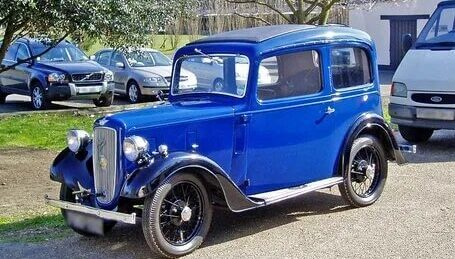
Austin Seven: The Car That Motorized Britain
The Austin Seven stands as one of the most significant automobiles in British motoring history, earning its rightful place as “the car that put Britain on wheels.” From its introduction in 1922 to the end of production in 1939, this diminutive yet revolutionary vehicle transformed personal transportation from an exclusive luxury into an accessible necessity for ordinary families across Britain and beyond.
Conceived by Sir Herbert Austin and his chief designer Stanley Edge, the Austin Seven addressed the fundamental challenge of creating a proper four-seater family car at a price point that working-class families could afford. This ambitious vision revolutionized the automotive landscape and established Austin as one of Britain’s premier motor manufacturers.
History and Development of the Austin Seven
The Austin Seven’s origins trace back to the post-World War I economic climate when Herbert Austin recognized the urgent need for affordable personal transportation. Inspired by the success of Ford’s Model T in America, Austin sought to create a British equivalent that would democratize motoring while remaining distinctly European in character.
Development began in secret at Austin’s Longbridge factory in 1921, with Herbert Austin personally financing the project when his board of directors initially rejected the concept. Working alongside young draughtsman Stanley Edge, Austin created a completely new approach to small car design that prioritized simplicity, reliability, and manufacturing efficiency.
The Austin Seven made its public debut at the 1922 London Motor Show, where its £165 price tag caused a sensation. This represented approximately half the cost of comparable vehicles, making car ownership realistic for middle-class families for the first time in British automotive history.
Production commenced in 1922 and continued until 1939, with over 290,000 examples built at Longbridge. The model’s success spawned numerous licensed variants worldwide and established the template for affordable family motoring that influenced automotive design for decades.
You may like to read one more classic car : Toyota Aygo
Technical Specifications and Engineering Innovation
Engine and Mechanical Systems
The Austin Seven featured a purpose-designed 747cc four-cylinder engine that became renowned for its reliability and efficiency:
Original Specification (1922-1939):
- Engine: 747cc inline four-cylinder
- Power: 10.5 hp initially, increasing to 17 hp by the 1930s
- Compression ratio: 4.9:1
- Top speed: 50 mph (early models) to 65 mph (later variants)
- Fuel consumption: 50+ miles per gallon
The engine employed side-valve configuration for simplicity and reliability, with a three-bearing crankshaft and splash lubrication system. This robust design proved exceptionally durable and easy to maintain, crucial factors for owners with limited mechanical knowledge.
You may like to read : Firebird Auto
Chassis and Construction
The Austin Seven utilized a conventional separate chassis with cross-bracing for structural integrity. This traditional approach provided excellent durability while allowing for diverse body styles and specialized applications.
Suspension System: The front axle employed semi-elliptic leaf springs with Hartford friction dampers, while the rear utilized quarter-elliptic springs. This simple yet effective setup provided acceptable ride quality for the era while maintaining manufacturing economy.
Transmission: A three-speed manual gearbox with floor-mounted shifter connected to a spiral-bevel rear axle. The transmission proved robust and reliable, though synchronized gears wouldn’t arrive until much later in automotive development.
Model Variants and Body Styles
Saloon Models
The four-door saloon represented the Austin Seven’s primary market focus, providing genuine family accommodation despite the car’s compact dimensions. Early saloons featured fabric bodies over wooden frames, later transitioning to all-steel construction for improved durability and safety.
Interior space, while limited by modern standards, proved adequate for typical 1920s and 1930s family requirements. The upright seating position and large windows provided excellent visibility and a surprisingly airy cabin atmosphere.
Tourer and Sports Variants
The Austin Seven Tourer offered open-air motoring at minimal cost, featuring a fold-down soft top and removable side curtains. These models became popular for weekend excursions and holiday touring, establishing Austin’s reputation beyond purely utilitarian transportation.
Austin Seven Ulster: This legendary sports variant, introduced in 1930, featured a supercharged engine producing up to 27 hp. The Ulster achieved remarkable competition success, including class victories at major racing events like the Tourist Trophy races in Northern Ireland.
Austin Seven Speedy: A more affordable sports option that provided enhanced performance through careful tuning and weight reduction rather than forced induction.
You may also want to read about other cars too like Is Mercedes GLE Worth Having.
Commercial and Specialized Applications
The Austin Seven’s versatility spawned numerous commercial variants including delivery vans, pickup trucks, and specialized utility vehicles. These applications demonstrated the chassis’s adaptability and contributed to the model’s commercial success.
Austin Seven Van: Enclosed cargo versions served countless small businesses and tradesmen, offering affordable commercial transportation with reasonable load capacity and excellent fuel economy.
Engineering Evolution and Improvements
Throughout its 17-year production run, the Austin Seven received continuous refinements that improved performance, reliability, and comfort:
Early Period Developments (1922-1927)
Initial production models established the basic formula while engineering teams addressed early reliability issues and manufacturing challenges. Improvements included enhanced carburetion, improved electrical systems, and refined gear ratios.
Mid-Period Enhancements (1928-1932)
Significant updates included increased engine power, improved braking systems, and enhanced body construction methods. The introduction of chromium plating and improved interior trim elevated the Seven’s perceived quality and market appeal.
Late Period Sophistication (1933-1939)
Final development phases brought hydraulic braking systems, improved electrical equipment, and more sophisticated styling. These late-production models represented the pinnacle of Austin Seven development, combining proven reliability with contemporary refinements.
Cultural Impact and Social Significance
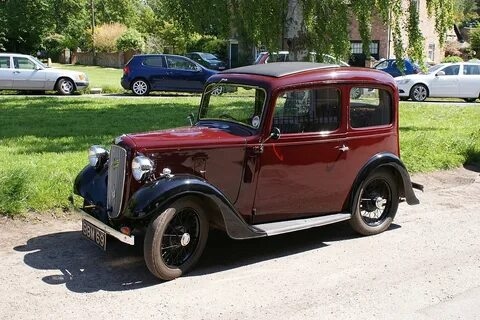
The Austin Seven’s influence extended far beyond mere transportation, fundamentally changing British social patterns and lifestyle expectations. Affordable car ownership enabled suburban development, weekend leisure activities, and enhanced employment opportunities as commuting distances expanded.
The model’s accessibility introduced countless families to motoring, creating generations of enthusiasts and establishing car ownership as a normal rather than exceptional circumstance. This democratization of personal transportation paralleled similar social changes occurring throughout the industrialized world.
Motorsport Heritage
Despite its humble origins, the Austin Seven achieved remarkable competition success that enhanced the marque’s sporting credibility. The Ulster variant’s victories against much larger and more expensive competitors demonstrated that engineering excellence could triumph over brute force.
Amateur racing flourished around the Austin Seven, with numerous clubs and competitions specifically for Seven enthusiasts. This grassroots motorsport involvement created lasting enthusiasm for the marque and established many racing careers.
International Licensing and Global Impact
The Austin Seven’s success attracted international attention, leading to licensing agreements that spread the design worldwide:
Germany: BMW produced the Seven as the Dixi, establishing the Bavarian company’s automotive manufacturing credentials and providing the foundation for future success.
Japan: Nissan (then Datsun) manufactured licensed versions that introduced modern automotive technology to the Japanese market and influenced subsequent domestic vehicle development.
America: American Austin produced modified versions for the US market, though limited success highlighted the challenges of adapting European designs for American conditions.
Restoration and Preservation
The Austin Seven’s enduring appeal ensures strong preservation interest among classic car enthusiasts. The model’s mechanical simplicity makes restoration projects accessible to amateur mechanics, while the extensive parts supply supports various levels of authenticity.
Parts Availability: Excellent reproduction part availability covers virtually every component, from body panels and mechanical parts to interior trim and electrical components. This comprehensive support network enables high-quality restorations regardless of original condition.
Technical Resources: Numerous specialist books, manuals, and online resources provide detailed technical information and restoration guidance. The active Austin Seven community shares knowledge and expertise generously among enthusiasts.
Ownership Experience and Driving Character
Modern Austin Seven ownership provides unique insights into 1920s and 1930s motoring experiences. The car’s simple controls, direct mechanical feedback, and modest performance create an engaging and educational driving experience that contrasts dramatically with contemporary vehicles.
The Seven’s lightweight construction and responsive handling remain entertaining despite limited power output. Modern traffic requires careful planning and defensive driving techniques, but rural roads and historic events provide ideal environments for enjoyment.
Collectibility and Market Values
Austin Seven values reflect the model’s historical significance and nostalgic appeal. Well-preserved original examples command strong prices, while restoration projects remain accessible for enthusiasts seeking authentic vintage motoring experiences.
Ulster and Sports Models: Competition-derived variants achieve the highest values, particularly examples with documented racing history or exceptional provenance.
Quality Saloons: Well-maintained family cars represent excellent value for money, offering authentic vintage character at reasonable prices compared to other pre-war classics.
Commercial Variants: Rare commercial versions and specialized body styles command premium prices from collectors seeking unusual examples of Seven versatility.
Maintenance and Technical Considerations
Austin Seven ownership requires understanding of pre-war automotive technology and maintenance practices. The side-valve engine proves remarkably robust with proper care, while the simple transmission and electrical systems remain accessible to enthusiastic amateurs.
Common maintenance requirements include regular lubrication, carburetor adjustment, and ignition system attention. The mechanical systems’ simplicity actually simplifies maintenance compared to more complex vintage automobiles.
How Shipcars Can Help with Your Austin Seven Transport
At Shipcars, we understand the Austin Seven’s precious place in British automotive history and provide specialized transport services appropriate for these important vintage automobiles. Whether you’re importing a rare Ulster variant or relocating your cherished family saloon, our experienced team appreciates the unique requirements of pre-war classic car transportation.Get a fast, reliable quote shipping with Ship Cars Ltd.
We offer comprehensive shipping solutions including RORO, shared container, and dedicated container services for international movements, plus professional UK transport using experienced trade plate drivers and specialized enclosed transporters. Our marine insurance options provide essential protection for valuable Austin Sevens during transit, with comprehensive coverage available up to 1.5% of vehicle value, ensuring your historic treasure receives the careful handling it deserves throughout the shipping process.
Contact us today to get all the details about shipping requirements or check our sailing schedule for upcoming shipping dates.
You may also like to read about other cars:


