


Shipping the World's Most Expensive Cars: What It Actually Takes
Quick Answer
Shipping an ultra-high-value or one-of-a-kind car internationally requires a dedicated sole-use sealed container — never RoRo. The vehicle is loaded at a specialist facility, the container is sealed and not opened until the destination port, and marine insurance is arranged on an agreed-value basis matching the car’s full worth. ShipCars handles the complete process from collection to delivery for classic, luxury, and supercar shipments worldwide.
Learn about: How they’re shipped · Insurance · Paperwork · Duty and taxes · Cost · FAQs
Why Shipping a Multi-Million Pound Car Is a Completely Different Process
Most international car shipping is straightforward: the vehicle goes onto a RoRo vessel, crosses an ocean, and arrives at the destination port. For a standard used car, that process works well. For a vehicle worth £500,000, £3 million, or £23 million, it is the wrong method entirely — and using it would be a serious mistake.
The world’s most expensive cars present a set of shipping challenges that standard freight logistics simply cannot address: extreme values that exceed any carrier’s standard liability, one-of-a-kind bodywork that cannot be repaired or replaced if damaged, hybrid and high-output powertrains with specific safety requirements, and dimensions or weights that require individual loading assessments before a container is even booked.
Understanding those challenges — and how specialist car shippers solve them — is what this guide covers. We use the world’s most expensive cars as illustrations, because the shipping decisions at the extreme end of the market show most clearly what good luxury vehicle logistics actually looks like.
Get a quote for luxury or high-value car shipping →
The Vehicles: Why These Cars Make Shipping So Demanding
These are not examples chosen for spectacle. Each one represents a distinct shipping challenge that a shipper of high-value vehicles must solve.
Rolls-Royce La Rose Noire Droptail — Approximately £23 Million
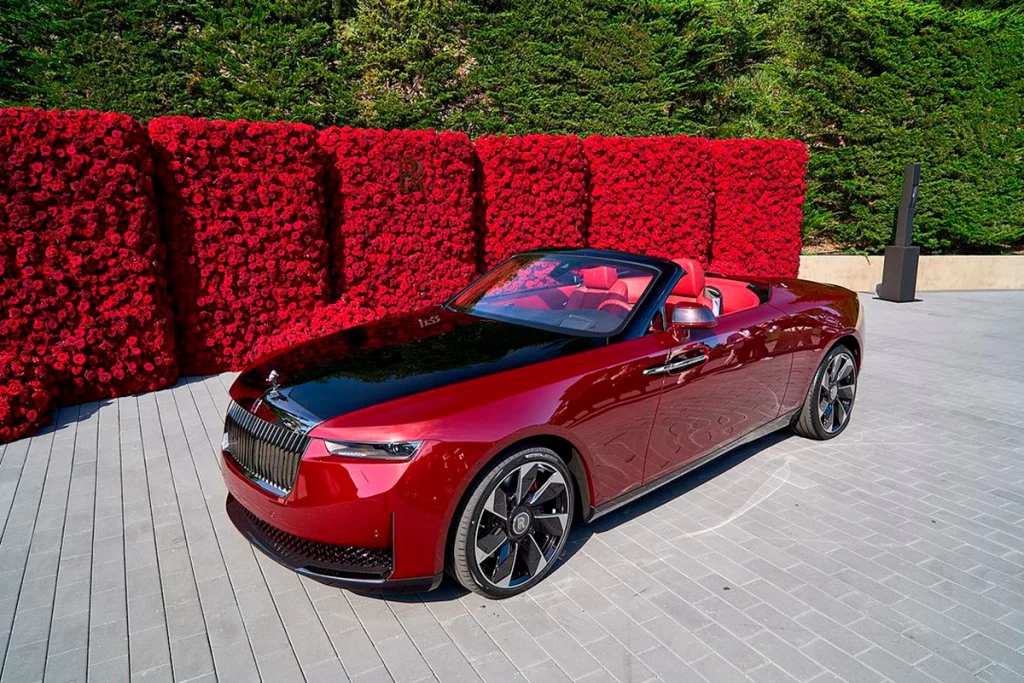
A single unique commission — the first of four bespoke Droptail roadsters. Its interior features over 1,600 individually crafted pieces of Black Sycamore veneer, taking nine months to complete. The body is carbon fibre finished in a layered dark rose lacquer requiring 16 separate coats.
The shipping challenge: There is no replacement for this car. A scratch on its carbon fibre body cannot be matched; a panel damaged in transit cannot be sourced. The agreed-value marine insurance figure must reflect the commission cost, not a depreciated market value. Standard carrier liability — calculated at a few pounds per kilogram of cargo weight — would cover a tiny fraction of the actual loss. The sole-use sealed container is not optional at this value; it is the baseline minimum.
Rolls-Royce Boat Tail — Approximately £20 Million
Three unique examples exist. The car stretches nearly six metres and features a rear deck that opens hydraulically to reveal a bespoke hosting suite.
The shipping challenge: At nearly six metres in length, the Boat Tail sits at the limit of a standard 20ft container’s internal length (approximately 5.9 metres). Mirrors, antennas, or extended bodywork can push overall length past this threshold. Before booking a container, the vehicle’s actual loaded dimensions must be confirmed. An open-top or flat-rack container may be required — ShipCars assesses this at the quote stage. Booking a container without first confirming dimensions is a common and costly error.
Bugatti La Voiture Noire — Approximately £10 Million

A single example, built on a stretched Chiron platform with a quad-turbo W16 engine producing 1,479 bhp. One vehicle, one owner, no possibility of ordering another.
The shipping challenge: The W16 engine’s fuel system must be drained to a safe level before the vehicle enters the container and is sealed. This is a standard preparation step for all car shipments, but on a vehicle of this complexity and value, it must be carried out by someone who understands the car — not a general-purpose port handler. ShipCars manages preparation as part of the loading process.
Bugatti Tourbillon — From £3.2 Million
The most expensive production car available to order in 2026, limited to 250 units. Its Cosworth-developed V16 hybrid powertrain produces 1,800 hp combined. It is a running, orderable car — but with a hybrid system that adds a layer of pre-shipping protocol.
The shipping challenge: Hybrid powertrains require battery charge levels to be within specific parameters set by the shipping carrier before loading. Too high a state of charge and some carriers will refuse to load the vehicle. ShipCars captures powertrain specifications — engine type, battery capacity, hybrid system type — at the quote stage and confirms carrier acceptance before the booking is made. No hybrid or EV shipment leaves without that confirmation. See our container car shipping page for detail on EV and hybrid protocols.
Ferrari F80 — Approximately £3.6 Million
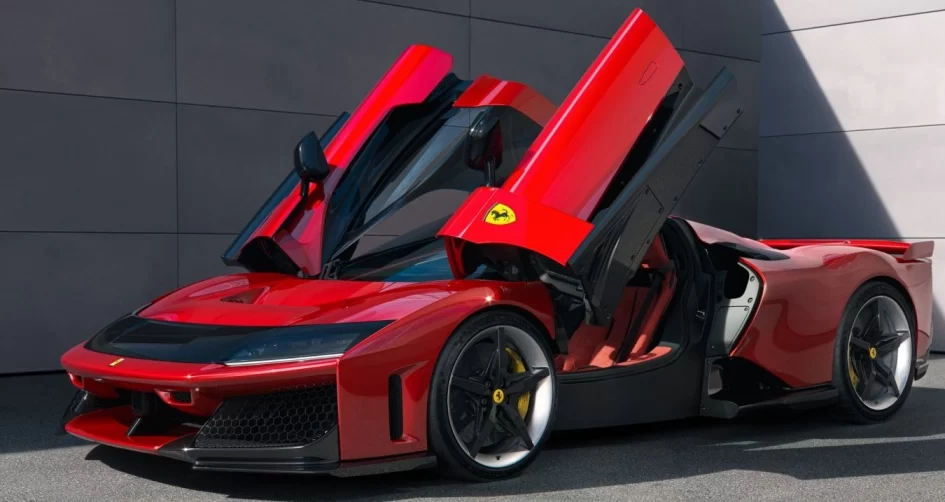
A hybrid hypercar limited to 799 units, all already sold. Its twin-turbocharged V6 combined with three electric motors produces approximately 1,200 hp. Its aerodynamic bodywork — including active elements — draws directly from Ferrari’s Formula 1 programme.
The shipping challenge: The F80’s active aerodynamic components and extremely low ground clearance require careful loading planning. Standard ramps may not provide adequate clearance for the front splitter or rear diffuser. ShipCars uses purpose-built ramp extensions designed for low-clearance vehicles. The loading approach is confirmed before the vehicle arrives at the facility — not improvised on the day.
Rolls-Royce Phantom Extended — From Approximately £500,000
The most accessible car on this list, and the one that ShipCars ships most frequently of the six. It is available through Rolls-Royce’s dealer network and is regularly sourced by UK buyers from European dealers, or by overseas buyers through UK auction houses.
The shipping challenge: At over 5.8 metres and approximately 2,900 kg, the Phantom Extended’s weight and length are confirmed at quote stage to ensure the correct container specification. It is also regularly shipped in both directions — UK buyers importing from Germany or the USA, and overseas buyers exporting from UK dealers. The paperwork requirements differ by direction and by origin/destination country; ShipCars manages both.
The Shipping Method: Why Sole-Use Container Is the Only Answer
For every vehicle on this list — and for any car where the shipping decision is consequential — the method is a dedicated sole-use sealed container. Here is what that means in practice, and why every alternative falls short.
What Is a Sole-Use Container?
A sole-use (FCL — Full Container Load) container is one container, one vehicle, one sealed unit from loading to destination port. No other cargo shares the space. The container is loaded at ShipCars’ facility, the doors are sealed, and they are not opened again until the destination port.
Inside, the vehicle is secured with timber wheel chocks and heavy-duty lashing straps at multiple anchor points — typically six-point lashing. For low-clearance vehicles, purpose-built ramp extensions are used at loading. A pre-shipment photographic condition report is completed before the container is sealed, documenting the vehicle’s condition at the point of departure.
Container sizes and capacity:
| Container | Internal length | Typical capacity |
|---|---|---|
| 20ft standard | ~5.9m | 1 standard car; confirm dimensions for cars >5.5m |
| 40ft standard | ~12.0m | 2 standard cars, or 1 very large vehicle with space |
| 40ft high cube | ~12.0m (extra height) | Vehicles over 1.9m tall (some SUVs, modified cars) |
For vehicles at the extreme of these dimensions — the Boat Tail, the Phantom Extended — exact loaded dimensions must be confirmed before booking.
Why RoRo Is Not Appropriate for High-Value Vehicles
RoRo (roll-on/roll-off) shipping involves driving the vehicle onto a multi-deck car carrier vessel, where it is parked in an open deck alongside thousands of other vehicles for the voyage. It is the most cost-effective shipping method for standard running vehicles — and it is completely unsuitable for vehicles of significant value.
On a RoRo vessel:
- The vehicle is exposed to salt air and sea spray throughout the voyage
- Multiple port workers handle the car at loading and discharge
- The vehicle sits on an open deck with no individual enclosure
- Cosmetic damage from handling, condensation, or contact with adjacent vehicles is not covered
For a vehicle worth £500,000 to £23 million, the cost difference between RoRo and a sole-use container is trivial relative to the asset value. There is no scenario in which RoRo is the right choice for a car of this nature.
→ Full comparison: RoRo vs Container car shipping — which is right for your vehicle?
When Air Freight Is the Right Answer
For the highest-value or most time-critical shipments, air freight delivers in 3–10 business days to most destinations. ShipCars works with carriers including British Airways World Cargo, Emirates SkyCargo, and Lufthansa Cargo.
Air freight is appropriate when:
- The vehicle’s value makes even a few extra weeks of transit risk unacceptable
- The owner has a hard delivery deadline (an event, a handover date, a registration window)
- The vehicle is compact enough to fit in standard air cargo units (motorcycles, compact classics, smaller supercars)
Not all full-size vehicles can be accommodated in standard air cargo configurations — ShipCars assesses dimensions and proposes the correct approach. Airline liability is capped at approximately SDR 22 per kilogram, making agreed-value cargo insurance essential for air shipments too.
Ask ShipCars about air freight for your vehicle →
Service details: Air freight car shipping from the UK
Marine Insurance for Ultra-High-Value Vehicles
This is the section most high-value vehicle shippers get wrong, and the consequences can be catastrophic.
Why Standard Insurance Is Not Enough
Every shipping carrier provides a baseline level of liability cover — but it is calculated per kilogram of cargo weight, not per unit of value. A 2,000 kg car under standard carrier liability might be covered for a few thousand pounds in the event of a total loss. For a vehicle worth £3.2 million or £23 million, that is worthless.
Agreed-Value Marine Cargo Insurance
For high-value vehicle shipping, marine insurance must be arranged on an agreed-value basis — a specific sum, agreed between the owner, ShipCars, and the insurer before the voyage begins, that reflects the vehicle’s actual worth. In the event of a total loss, the insurer pays the agreed figure.
Ship Cars arranges marine cargo insurance as part of every shipment:
- Total Loss Cover: 1% of the agreed vehicle value plus shipping cost — covers total loss from fire, sinking, or catastrophic water damage
- Comprehensive Cover: 1.5% of the agreed vehicle value plus shipping cost — adds cover for cosmetic damage; available for vehicles 10 years old or newer
For one-off commissions valued at £10 million or above, or vehicles with agreed values that exceed standard underwriting thresholds, ShipCars recommends discussing cover with a specialist Lloyd’s of London marine cargo underwriter. We can connect clients with appropriate brokers.
A vehicle condition report is completed before loading — this is the baseline document against which any damage claim is assessed at the destination. Without it, a claim is extremely difficult to pursue.
→ Full details: Marine insurance for vehicle shipping — coverage options and pricing
Documentation and Customs for Luxury Vehicle Shipping
Exporting a High-Value Car from the UK
When shipping a high-value car from the UK:
- V5C logbook — Section 11 completed; sent to the DVLA with a permanent export notification (ShipCars handles this)
- UK export declaration — filed through HMRC’s Customs Declaration Service; ShipCars manages this
- Commercial invoice — stating the agreed value in GBP; required for both customs and insurance
- Bill of lading — issued by the shipping line once the vessel departs; the key document for customs clearance at the destination port
→ Complete documentation guide: Documents required for exporting a vehicle from the UK
Import Duties and Taxes at the Destination
Every destination country applies its own import duty and tax framework. For context, the UK typically applies 6.5% customs duty plus 20% VAT on the customs value for imported vehicles. For a vehicle valued at £3.2 million, VAT alone at 20% exceeds £640,000 — before duty.
Destination duty and tax are not included in the shipping quote. They are assessed by the destination country’s customs authority and paid by the consignee (the vehicle’s recipient). Budget for them before the vehicle is purchased.
ShipCars works with customs brokers at destination ports and can advise on typical duty structures for specific routes — but the final amounts are determined by the destination authority, not by us.
→ Full guide: Complete guide to import duties and taxes when shipping a car overseas
How Much Does It Cost to Ship an Ultra-High-Value Car?
Sole-use container shipping costs from ShipCars, UK port to destination port (20ft dedicated container):
| Route | Starting price | Typical sea transit |
|---|---|---|
| UK → UAE (Jebel Ali) | From £1,600 | 18–28 days |
| UK → USA (East Coast) | From £1,800 | 12–18 days |
| UK → South Africa | From £1,800 | 25–35 days |
| UK → Canada | From £1,900 | 15–25 days |
| UK → Australia | From £2,000 | 55–60 days |
| UK → USA (West Coast) | From £2,200 | 22–28 days |
| UK → New Zealand | From £2,500 | 55–60 days |
Prices are sea freight only and exclude marine insurance, destination port charges, customs duty, and local delivery. Prices subject to change — request a current quote for your specific vehicle and route.
For a vehicle valued at £3 million+, the sea freight cost is a small fraction of the total landed cost. Duty, VAT, and insurance are the dominant variables — confirm them before committing to the purchase.
Air freight is priced individually based on actual or volumetric weight (whichever is greater). Contact ShipCars for an assessment.
Get a full itemised quote for your vehicle and route →
Frequently Asked Questions
What shipping method should I use for a car worth more than £500,000?
A dedicated sole-use sealed container is the correct method for any car of significant value. RoRo is not appropriate — it exposes the vehicle to salt air, multiple handlers, and the open deck environment for the full duration of the voyage with no individual enclosure. The cost difference between RoRo and a sole-use container is trivial relative to the vehicle’s worth.
Can Ship Cars ship a one-of-a-kind or limited-edition car?
Yes. Ship Cars has shipped unique commissions, pre-production prototypes, and limited-production vehicles. The process for a one-off is the same as for any high-value vehicle — sole-use container, agreed-value insurance, pre-shipment condition report — but the insurance conversation requires more care because agreed values on unique vehicles may require specialist Lloyd’s underwriting rather than standard policy limits.
How is marine insurance arranged for a car worth £10 million or more?
Standard marine cargo policies carry value limits that may not cover vehicles at the extreme end of this list. For vehicles with agreed values above £5 million, ShipCars recommends a specialist Lloyd’s of London marine cargo underwriter. We can connect clients with appropriate brokers. The agreed value must be documented and accepted by the insurer before the vessel departs — there is no retrospective agreement.
Can hybrid or electric hypercars be shipped internationally?
Yes, but they require additional pre-shipping protocol. Battery charge levels must be within parameters set by the shipping carrier before the vehicle can be loaded. Carriers’ requirements vary; ShipCars confirms carrier acceptance at the quote stage. No hybrid or EV shipment is booked without that confirmation. Dedicated container is the correct method — RoRo is not accepted for EVs.
What happens if the car is damaged in transit?
The pre-shipment condition report, completed before the container is sealed, is the baseline document against which any damage is assessed on arrival. If damage is found on arrival, a formal survey is commissioned at the destination port, and the claim is made against the agreed-value marine cargo policy. This is why both the condition report and the agreed-value insurance are non-negotiable — without them, a damage claim is extremely difficult to substantiate.
How long does it take to ship a supercar internationally?
Sea freight transit times depend on the route: UK to UAE is 18–28 days; UK to USA East Coast is 12–18 days; UK to Australia is 55–60 days. Add 2–5 days for collection and loading preparation, 3–7 days for UK port processing, and 2–7 days for destination customs clearance. Air freight compresses this to 3–10 business days from departure to arrival at the destination airport. Total door-to-door by sea is typically 4–10 weeks depending on route.
Does Ship Cars handle both export from the UK and import into the UK for high-value cars?
Yes — both directions. Many ultra-luxury vehicles are sourced by UK buyers from European manufacturers or dealers (Rolls-Royce from Goodwood, Bugatti from Molsheim, Ferrari from Maranello) and require only road transport to a UK port. Equally, overseas buyers regularly source vehicles through UK dealers or UK auction houses including RM Sotheby’s and Bonhams, and export them. Ship Cars handles UK export documentation, UK import clearance, and all intermediate logistics. Get a quote for your specific direction and route →.
What documentation is needed to ship a luxury car from the UK?
The core documents for a UK export are: the V5C logbook (Section 11 completed, sent to the DVLA), a UK export declaration filed through HMRC’s Customs Declaration Service, a commercial invoice stating the agreed vehicle value, and the bill of lading issued by the shipping line. ShipCars manages the UK export documentation as part of the service. Destination-side documentation varies by country — ShipCars advises on what is needed for your specific route.
Reviewed By: Navdeep Singh, Director, 10 years Experience in Vehicle Shipping | Published: 26 September 2026 | Last updated: 16 October 2026


